
How Stefan Unger got “married to the project”
This co-op member became an expert in rainscreen cladding by leading his building’s renovation project
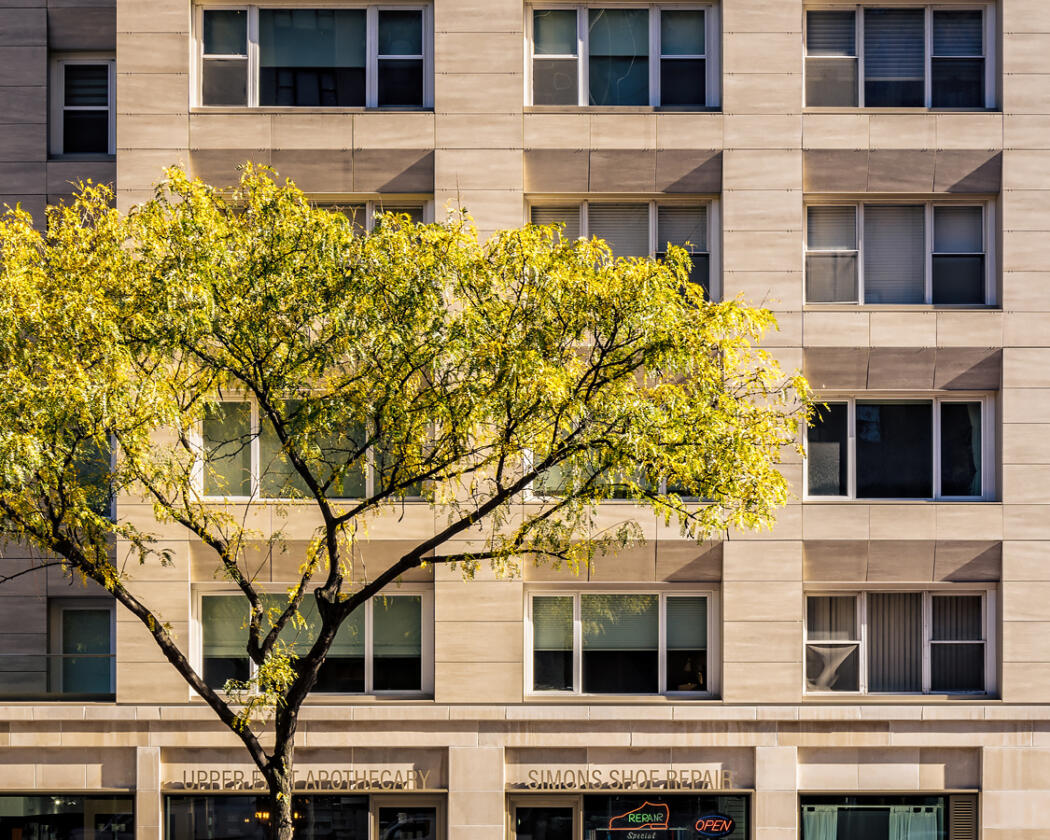
Side view of 201 E. 79th St. Photo: Rawlings Architects/Alexander Severin
Stefan Unger works in the importing-exporting business, an occupation that has him regularly traveling to countries like Greece and Bulgaria. But recently, he was making trips of a different sort: up the scaffolding surrounding 201 E. 79th St., his home of 20 years.
He was up there, sometimes three times a week, because he was the co-op board member in charge of the building’s recladding project. And he took the job very, very seriously.
“I was married to this project,” he said.
In some ways, Unger is married to the building itself. His aunt was an original tenant when 201 E. 79th St. was built decades ago, and she left her two-bedroom apartment to Unger and his wife when she passed in 2005.
Because Unger grew up visiting family at the high rise, he knows the ins and outs of the building. “I know places… in the basement that I had to show the resident manager and staff, that existed behind doors,” Unger said.
He was on the co-op board when it began exploring ways to address the damage to the original glazed-brick façade. Unger and two others on the board formed a committee that met with various firms and experts to best understand how to tackle the problem. Once they found the contractors they wanted to work with, they would present their proposal to the rest of the board for approval.
An avid swimmer with seemingly boundless energy, Unger threw himself into research. “There’s nothing I can’t do,” he said.
Ahead of the façade installation, he flew to Crossville, Tennessee to check out the factory where the porcelain cladding for the building was manufactured, wanting to familiarize himself with the production process.
And he also took all those trips up and down the scaffold, often dedicating as many as 30 hours a week to the project. This level of involvement came in handy when problems arose, because he was able to consult architects and contractors without delaying construction.
“If there was an issue, I wanted to be able to decide on it immediately,” Unger said.
His involvement with the project also meant he was sometimes on the receiving end of complaints about the noise the workers made when they began drilling off the bricks, starting at 7 in the morning.
“I got calls at five after seven, if they knew where to reach me,” he said.
Unger said that decarbonization purely for the sake of it was not top of mind when he began to oversee the renovation project — rather, meeting local regulations, lowering costs, and improving the building’s energy efficiency grade were his priorities. But he’s been able to put his experience to good use; since the project, he has begun consulting for another white-brick building undertaking façade work.
Unger’s term on the co-op board recently came to an end. To commemorate his involvement with the façade project, Unger has kept a memento of the building’s past: the first two bricks that were removed. When asked what he would do with them, he laughed.
“I don’t know,” Unger admitted, saying that he had collected souvenirs like volcanic rocks from trips to Italy. “I haven’t framed them yet or anything, but I will.”