
Keep on Pumping: Tips for maintaining a heat pump
Experts say careful installation, maintenance, and user behavior are the keys to keeping systems efficient.
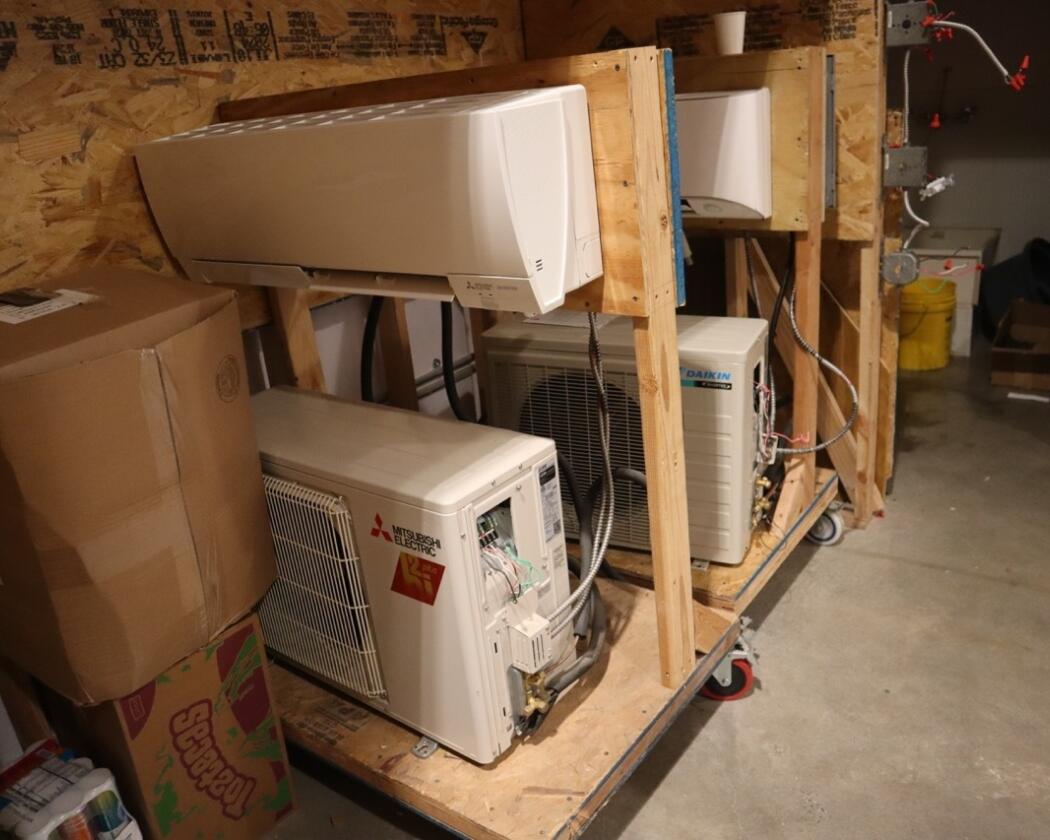
Mini split heat pumps are used as demonstration materials for NYCHA Clean Energy Academy students. Photo: Carrie Klein
Heat pumps are becoming commonplace in the city as New Yorkers replace fossil fuel-powered boilers with heating and cooling systems that run on electricity.
Buildings that have gone fully electric are already reporting significant reductions in their carbon emissions and energy bills. Others are drawn to heat pumps for the greater comfort and room-by-room temperature control that older boiler systems often cannot match.
The city government is also making heat pumps a key part of its building decarbonization strategy, with plans to install window heat pump units in 20,000 New York City Housing Authority apartments over the next five years.
While technological advances and a growing market have made heat pumps much more common in recent years, most New Yorkers are less familiar with what needs to be done to keep these heat pumps running in top form over many years.
“These systems behave differently than what a boiler-based building would behave. They depend more on control, airflow, electrical systems, so even a small issue can affect comfort or lead to higher energy bills,” said Joseph Novella, Chief Building Scientist at Nova 1, a mechanical contracting company that specializes in electrifying New York City buildings.
But when designed and commissioned properly, he added, “these systems are better, low maintenance, faster, comfortable, and overall better for the grid and the environment.”
It Starts with the Install
The most important heat pump maintenance issue to consider is right at the beginning — choosing the right installer, one who is trained, knowledgeable, and well supported.
“Whoever is managing the electrification process has to make sure that the consultants and contractors involved are properly trained, certified, and working closely with the manufacturer of the equipment,” Novella said. He noted that whenever his team is called in to troubleshoot problems with the equipment, the issues often stem from poorly designed systems or incorrect installations completed by contractors with limited experience or from poorly designed systems.
Don’t Ignore The Basics
Once heat pumps are properly installed and set up, they are expected to require very little maintenance because they operate as sealed systems. Unlike fossil fuel – based burners, heat pumps do not rely on combustion, so much of the maintenance associated with combustion systems disappears. There is no burner to tune up and no need for fresh air intake into a combustion chamber.
One of the main maintenance tasks for heat pumps is replacing or cleaning the filters in the air handlers. The outdoor unit also typically contains a heat exchanger or coil that needs periodic cleaning.
“Just like a window air conditioner, the heat pump system has a little filter over the coil. Because so much air is being pulled through that coil, dust can accumulate there and inhibit heat transfer, making the system less efficient,” said Paul Reale, director of training at the CUNY Building Performance Lab.
Cleaning the filters is pretty straightforward. “The filters are right in the air handler. So in a wall-mounted air handler, you basically just open the cover, pull the filter out, rinse it off, and put it back,” Novella added.
Signs For Servicing
The clearest sign that a heat pump system is malfunctioning is when an apartment is not being properly heated or cooled. Often, this can indicate something as simple as dirty filters.
“I’ve had calls where people complain that their (heating) system is not working — turns out that it is working, but the filters weren’t clean,” Novellas said.
Another important signal comes when the system using too much electricity. When residents complain about unusually high electric bills, technicians find that the system’s electric resistance backup heat has been turning on too often. Heat pumps move heat from one space to another rather than generate it, making them highly efficient. But electric resistance backup systems create heat directly from electricity, which makes them far less efficient and more expensive to operate. If your electricity bill spikes, call a heat pump technician who will be able to properly diagnose the problem.
Another serious issue to be on guard for is a refrigerant leak. These leaks occur within refrigerant pipes and are primarily caused by improper installations or aging systems. Indications for refrigerant leaks include ice buildups in pipes or oil stains near joints and occasionally, a continuous hissing or bubbling sound can also signal a weak joint and leaks. This fix should also be left to a technician, who will need to test and monitor pressure levels.
“When technicians realize the pressure is low, they’ll just go ahead and pump more refrigerant. Best case scenario is that the technician coming to refill your refrigerant will also find the leak and fix it,” Reale said.
Leaks are important to address immediately because of the environmental harm they can cause. Most refrigerants are made of extremely powerful greenhouse gases that trap heat when emitted into the atmosphere. So once the refrigerant leaks, the direct emissions can cancel out the emissions saved by using a heat pump in the first place.
Most heat pumps have traditionally used a refrigerant called R‑410A, which has an extremely high global warming potential — about 2088 times that of carbon dioxide over the course of 100 years. But this is being phased out in favor of newer refrigerants such as R32, with much less warming potential. However, R‑410A usage is still allowed in repairs, so users should be aware of what type of refrigerant their system uses.
Best Practices
Good installations should include training for building superintendents and even occupants. Installers may offer educational get-togethers for residents, explaining controllers, the different modes of the equipment, and how to change filters. These events should also include simple, but not always obvious, best practices. For example, users should not turn off their systems even if they’re away for days at a time; these machines are designed to run all the time. It is best to use a modest temperature setback instead of shutting off the whole system.
The experts also recommend that buildings adopt a practice of always servicing all equipment once a year. If servicing is needed more frequently than that, building managers should consult the service technician, as it could be a sign of larger problems.
In general, residents or building owners can extend the life of the heat pump through simple measures.
“Keep it clean. Change the filters. Keep an eye on the performance. Call in the technician. Have it regularly serviced,” Reale said. Typical heat pumps last for 10 to 15 years. With good servicing, its lifespan can reach up to 20 years.“It’s important that you don’t just set it and forget it. Keep an eye on these systems,” he added.