
Finding clean energy funds: A guide to NYSERDA’s incentives and programs
An introduction to the myriad cost sharing, rebates, and free assistance programs from New York state’s energy authority.
Photo: Otis Miller
For multifamily building owners in New York City — affordable or market rate, condo or co-op or rental — energy upgrades are both a matter of compliance with Local Law 97 (LL97) and a significant financial investment. But building owners and residents don’t have to do it alone — there is help to be found.
The New York State Energy Research and Development Authority (NYSERDA), a public benefit corporation driving the transition to a clean energy economy for the entire state of New York, has developed incentives specifically aimed at navigating that transition through rebates, grants, subsidized engineering studies, low-interest financing, and operational support programs.
While NYSERDA designs programs for various building types across the state, many programs are specifically for multifamily buildings, which NYSERDA defines as hosting five or more residential units, and where the primary building use is residential.
The combined value of these programs now represents one of the largest pools of public funding available for building modernization and emissions reduction in New York City. But navigating this fragmented incentive landscape can be difficult for the non-expert. Most of these NYSERDA programs require the help of a registered professional to successfully apply, and a NYSERDA spokesperson we spoke to recommended that building owners utilize the help of qualified contractors, NYSERDA’s Multifamily Team, or NYS Regional Clean Energy Hubs in deciding which specific program is right for their building.
Darren Johnson, the Director of Compliance at Argo Real Estate, has become very familiar with NYSERDA’s various incentive offerings in his various roles in New York City’s clean energy economy. He agrees that the best tool in any building’s toolkit is an expert guide. “You need a consultant, there’s no way around it,” Johnson told Skylight. “That’s how you’re going to be able to maximize the incentive dollars you can receive from these programs.”
In the meantime, however, Skylight has created a guide to serve as an introduction to help decision makers in multifamily buildings navigate the various decarbonization incentives available.
A few notes about this guide’s organization: It can be helpful to think about NYSERDA’s different offerings as tools to help with various steps in the process of doing a clean energy retrofit, and that’s how we’ve organized the suite of offerings here. Technical assistance and implementation programs are aimed at the beginning of a project; then financing and utility programs typically assist with implementation; and finally, full-service programs which provide assistance throughout. We’ve also indicated whether each program is applicable to affordable or market-rate housing.
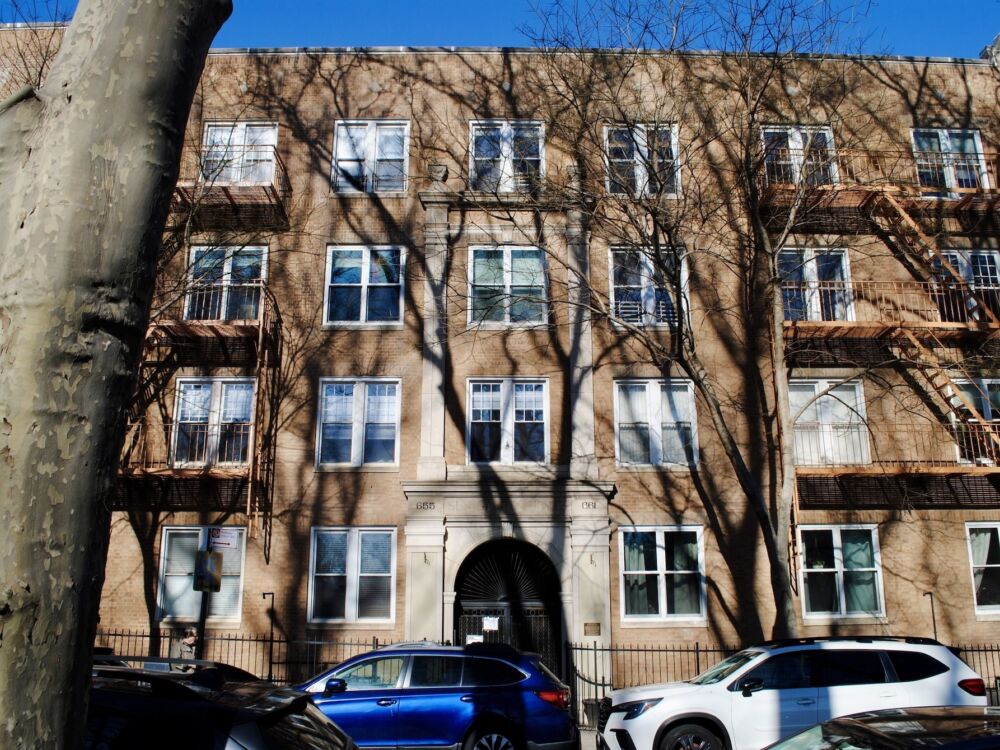
Sun Garden Homes, a co-op in Sunset Park, began their retrofit project with an energy audit. Photo: Hannah Berman
Technical Assistance Programs
Experts we spoke to agree that NYSERDA assistance is especially robust for the work that addresses the thoughtful planning of how to make energy upgrades, which it calls “technical assistance.” These programs provide funding or incentives for the first step towards an energy-efficiency construction project: studies, audits, assessments, design services, or training sessions to help prepare a future project.
While this planning step may seem preliminary, Johnson emphasizes its importance over a project’s lifespan. “Being able to put together a plan to think about the different stages [is important], because there’s so much that goes into being able to do a major retrofit upgrade. You really have to get back to making sure you understand your choices.”
Affordable Solar and Storage Predevelopment and Technical Assistance (PON 3414)
Eligibility: Affordable Housing
This incentive addresses barriers to installing solar installations on affordable housing for low- to moderate-income households, and is available to owners, providers, or managers of multifamily regulated affordable housing (which NYSERDA defines here and here) or community organizations that provide services to low- to middle-income households (defined here). The program offers up to $200,000 in funding for the pre-development, technical assistance, or installation of solar panels. Fifth Avenue Committee, an affordable housing operator in Brooklyn, took advantage of the program to get assistance in installing solar at several of their properties, benefitting nearly 300 residents.
Eligibility: Market-Rate & Affordable Housing
The FlexTech program is NYSERDA’s most popular offering for the multifamily sector; per a NYSERDA spokesperson, in 2025, the program provided an energy audit or assessment to approximately 450 multifamily buildings, totaling over 50,000 units. The program provides cost sharing to complete an energy study, which provides a holistic understanding of a building’s energy use and opportunities for efficiencies.
The program covers 50 percent to 75 percent of the cost (up to $500,000, dependent on housing type) and is available to a range of building types including multifamily, as long as the owner pays into the electrical System Benefits Charge (owners would see an “SBC” or “NYSERDA Clean Energy Fund” listed as a charge on their latest electrical bill).
FlexTech studies can help determine such aspects in how to reduce energy bills; which clean energy projects or upgrades would be appropriate for your building; the creation of a long-term energy plan, and more. The study must focus on energy efficiency and carbon reduction, electrification, or preparation for electrification, and use a program-approved FlexTech Consultant or Independent Service Provider.
“One of the great things about the FlexTech program, [is] it provides assistance for those types of studies,” said Johnson, “because they can get very expensive. These decarbonization studies are extremely helpful for people to understand how to be able to lay this out, and it allows [for] communication to all of the stakeholders. Because otherwise, what happens is — and we’ve seen a lot of buildings do this — they just throw darts.”
SAMES (Small Affordable Multifamily Energy Study)
Eligibility: Affordable Housing
This incentive provides free energy studies for small- to medium-sized buildings (50,000 square feet or less, with 5 units or more) that meet NYSERDA’s affordable housing requirements. The studies cover in-depth assessments of energy systems, identification of energy-saving improvements like lighting replacements, envelope updates, and HVAC upgrades. A NYSERDA spokesperson notes that this is a part of FlexTech that is specific to small affordable multifamily buildings only, so contractors who perform the studies are also pre-qualified FlexTech contractors.
Owner’s Representative Services for Multifamily Buildings (Owner’s Rep) (PON 5899)
Eligibility: Market-Rate & Affordable Housing
Building systems and decarbonization options are complex topics for building owners, and so NYSERDA created this program to match owners with specialized, technical experts who will act on behalf of building owners throughout the planning, design, and installation process of energy efficient upgrades. They can also assist with managing the bid process for contractors, overseeing construction, and communicating with various stakeholders.
Funding up to $35,000 is available for buildings that meet at least one of the following criteria: organized as a co-op or condos, located in disadvantaged communities, contain 50 or more residential units, or meet NYSERDA’s guidelines for affordable housing.
On-site Energy Manager (PON 3701)
Eligibility: Market-Rate & Affordable Housing
Most multifamily buildings do not have the financial capacity for an energy project manager who would develop processes that increase energy efficiency, lower operational costs, reduce maintenance time, and future-proof the facility. NYSERDA’s OsEM Program provides funding to share the cost for multifamily buildings to hire a full-time or part-time on-site energy manager (through NYSERDA’s list of consultants here). The program offers a 75% cost share for market-rate buildings, or 100% cost-share for affordable buildings.
Johnson points out that having help from a qualified consultant is a must on nearly any retrofit project involving NYSERDA incentives — not only because the state agency requires it to submit applications for various programs, but also these experts know best how to plan, predict, and execute these efficiency projects for maximum impact.
Implementation Programs
These programs provide financial assistance for the next step in a project, i.e. the actual purchasing, installation, or commissioning of energy efficiency measures. Most of the implementation programs are intended exclusively for affordable multifamily housing developments.
REDi: EB — Resilient and Equitable Decarbonization Initiative for Existing Buildings
Eligibility: Affordable Housing
This joint program with the Department of Housing Preservation and Development (HPD) and NYSERDA targets existing multifamily buildings in New York City that are receiving financing through HPD (especially those currently using oil or electric resistance for heating and hot water). The program provides funding to cover the incremental construction costs required to electrify domestic hot water and space heating, and improve envelope performance.
Funding comes as a match to the HPD subsidy that the building is required to seek, and successful applicants will work with a Technical Assistance Provider to design and scope the project. Applicants are encouraged to seek FlexTech funding to cover an energy efficiency study as a first step for their potential project, but otherwise the program cannot be combined with several other NYSERDA and federal programs such as AMEEP or NYS Clean Heat.
REDi: DEEP — Deep Energy Retrofits
Eligibility: Affordable Housing
REDi: DEEP is another joint program with HPD available to the same target building type (multifamily buildings receiving financing through HPD) but are looking to do deep-energy retrofits that achieve at least a 35% improvement in modeled energy savings when comparing the existing system to the new one. These projects typically involve substantial envelope improvements, comprehensive electrification of all building systems, and alignment with high-performance building standards such as passive house.
Funding during construction phases is up to $20,000 per unit and up to $5 million per project, plus up to $25,000 in soft costs upon project finalization and approval. Like REDi: EB, the REDi: DEEP program awardees cannot stack the program with several other NYSERDA programs such as AMEEP or NYS Clean Tech.
HCR/NYSERDA Clean Energy Initiative (CEI)
Eligibility: Affordable Housing
This partnership between NYSERDA and New York State Homes and Community Renewal (HCR) funds all-electric retrofits for existing and historic buildings, typically in the form of heat pumps for domestic hot water and/or space heating and envelope and ventilation improvements. Projects are described as either substantial or moderate rehabs, and funding is available for projects seeking Low Income Housing Tax Credit (LIHTC), bond financing, and/or other subsidized financing from HCR. Similar to the REDi:EB program, successful applicants will be assigned a Technical Assistance Provider who will assist with design and compliance at no extra cost.
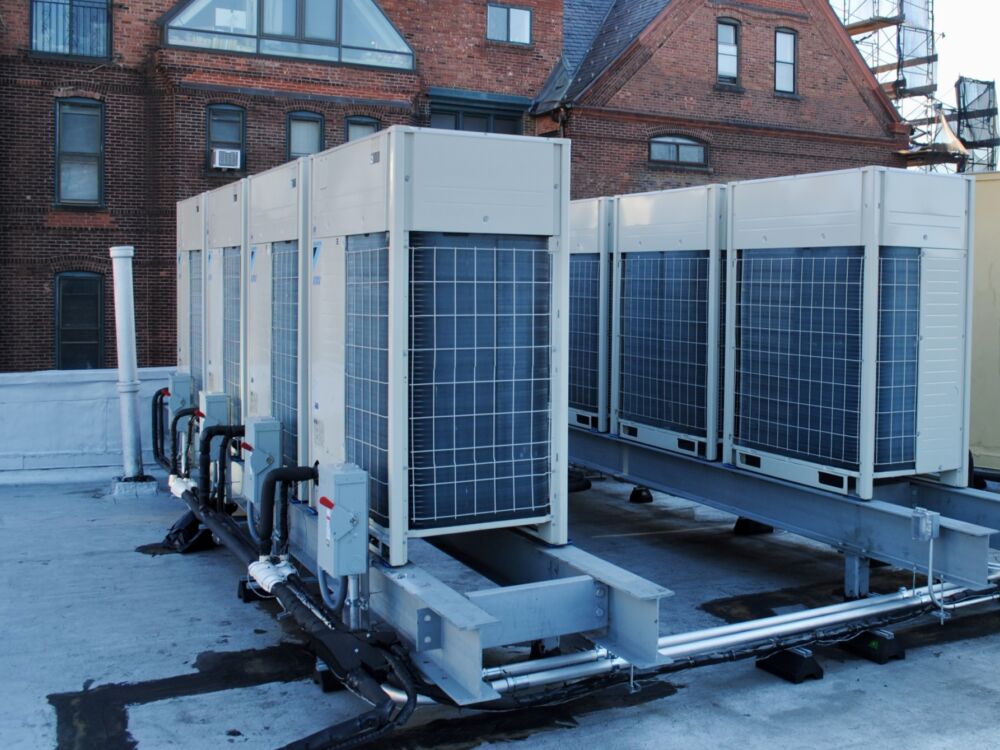
Condensers on the roof at 205 Hicks St, funded in part by the New York State Clean Heat Statewide Heat Pump Program. Photo: Hannah Berman
Full-Service Programs
Full-service programs provide funding for both early-phase technical assistance and the next phase of implementation of energy efficiency projects.
NY-Sun Residential/Nonresidential Incentive Program (PON 2112)
Eligibility: Market Rate & Affordable Housing
This program, through New York Solar Authority’s Megawatt Block Program, is New York State’s primary way of delivering direct financial incentives for the installation of solar panels, of which is paid as a lump-sum rebate after a completed installation. The incentive amount is in dollars per watt ($/W — remember that a watt is the standard unit of power, measuring the rate at which energy is transferred, consumed, or generated), and varies depending on the size and location of the project. There are different rates for the five different territories in the State; there are also greater incentive rates for early market participation based on location. Approved applicants must use program-approved contractors to complete the work.
For buildings considering taking on a solar project, however, Johnson advises that they consider how a solar array fits into their overall energy goals — because they can vary.
“Are [your] goals to reduce my electricity consumption? [If so,] installing solar will help you reduce your electricity consumption,” he said. “Is my goal to find a project that’s going to help reduce my carbon emissions and lower any sort of potential fines in the future? If that’s the case, solar may not be at the top of the list.”
Financing Programs
NYSERDA also provides financing for projects focused on carbon reduction technology and upgrades in existing multifamily buildings through NY Green Bank — a specialized fund that brings together public capital and the private banking sector to jumpstart clean energy infrastructure and finance projects that might not be funded otherwise. In more than a decade of its existence, NY Green Bank has committed close to $3 billion to such projects.
NY Green Bank – Clean Energy Financing Arrangements (RFP 1)
Eligibility: Market Rate & Affordable Housing
This financing opportunity targets projects in the range of $10 million to $50 million for a variety of clean energy and sustainable infrastructure projects and technologies throughout the state, such as clean energy generation sources (solar, wind, hydroelectric), energy-efficient appliances and HVAC building systems, and more. Projects must employ strategies and technologies that reduce greenhouse gas production and other public health benefits. Financing is available in several different forms, including debt, equity, credit enhancement, and pre-development financing solutions supporting clean energy projects at every stage, from early development and construction through long-term operations.
NY Green Bank – Financing Arrangements for High Performance Affordable Housing (RFP 18)
Eligibility: Affordable Housing
This incentive is targeted at providing financial assistance (either loans or refinancing) for New Yorkers living in historically disadvantaged communities (DACs), either in regulated or naturally-occurring affordable housing. These financing options are available throughout the project life cycle, including pre-development loans, construction financing, equipment and retrofit loans, and long-term permanent debt that can also be used to refinance existing mortgages while recognizing future energy savings. Projects can be either new construction or the retrofitting of existing housing to high levels of energy performance (electrification and/or electrification readiness measures for existing buildings, all-electric building systems in new construction projects).
Utility Programs
These programs are offered in partnership with a local utility (i.e. Con Edison).
New York State Clean Heat Statewide Heat Pump Program (NYS Clean Heat)
Eligibility: Market Rate & Affordable Housing
In New York City, the NYS Clean Heat program is administered by ConEdas an incentive for the electrification of space heating and cooling systems, water heating, and even some envelope improvements and heat pump controls when paired with an eligible heat pump system.
Experts recommend the program as a powerful on-ramp to help more New Yorkers install heat pumps in their buildings, and many in the city — including Katherine DeFehr, who spoke to Skylight in 2024 — have benefitted from it. In 2020, her Brooklyn Heights co-op building qualified for $215,694 in incentives through the Clean Heat program to install heat pumps throughout their 20 units.
Common projects supported by Clean Heat include air-source heat pumps, ground-source (geothermal) heat pumps, central heat pump systems, and domestic hot water heat pumps. The incentive is distributed in the form of payment directly to program-specific participating contractors or distributors.
New York State Affordable Multifamily Energy Efficiency Program (AMEEP)
Eligibility: Affordable Housing
While NYS Clean Heat is narrowly focused on the electrification of heating and cooling systems, AMEEP is broader in scope — projects can range from lighting upgrades to new windows, insulation, and comprehensive whole-building retrofits — but specifically only for affordable multifamily buildings.
AMEEP is also administered by ConEd, and incentives are typically provided as cash rebates or grants to the building owner based on the scope of the project. More complex, expensive projects such as window replacements or domestic hot water heater replacements lead to larger rebates compared to simpler and smaller-scale projects like new common area lighting or energy-efficient appliances (dishwashers, stoves, etc). The incentive in New York City is capped at 85 percent of the total project cost or $1,000,000, whichever is lower.