
How steam heat boilers work
Boilers have warmed New York buildings for decades. But to prepare them to meet the city’s new climate standards, we must first understand how they function.
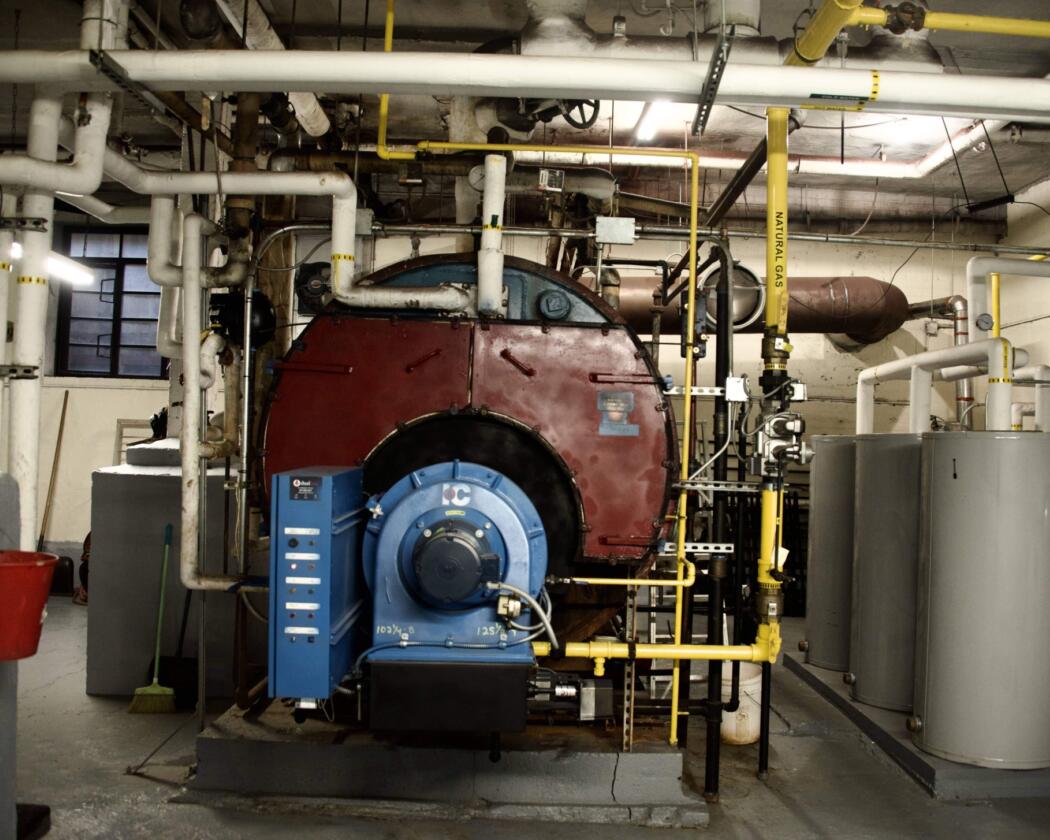
The boiler in the basement of Sherman Terrace Co-op. Photo: Demi Guo
Steam heat boilers have served as the main source of indoor heat in New York City for generations, providing warmth to thousands of buildings and millions of residents every winter. Steam heating systems first became popular in the early 20th century, replacing dirty, inefficient coal- and wood-fired stoves that had been used to heat individual apartments. In contrast to stoves, central steam heating systems could reliably produce sufficient heat to be distributed throughout an entire apartment or high-rise office building, and were relatively simple to operate with a small maintenance crew. Most early steam heating systems still used coal for fuel — and caused significant air pollution.
Steam boilers remain the most common heating system in New York City buildings today — a 2019 Urban Green Council report found that steam boilers provided heat and hot water service to more than 78 percent of multifamily buildings in the city, either through on-site boilers or the Con Edison district steam system below the streets of Manhattan — though most are now powered by fuel oil or natural gas. And while they’re certainly better than coal, these sources still contribute greatly to overall building emissions, which make up the largest share of greenhouse gas emissions in the city. As New York has redoubled its efforts to reduce greenhouse gases and combat climate change via Local Law 97 (LL97), boilers have become a primary target for emissions reductions. Building owners and operators looking for ways to reduce their emissions are finding real savings by simply tuning their boilers up, not decommissioning them. But before knowing how to improve a boiler’s performance, it’s important to understand how they work in the first place.
How do steam boilers work?
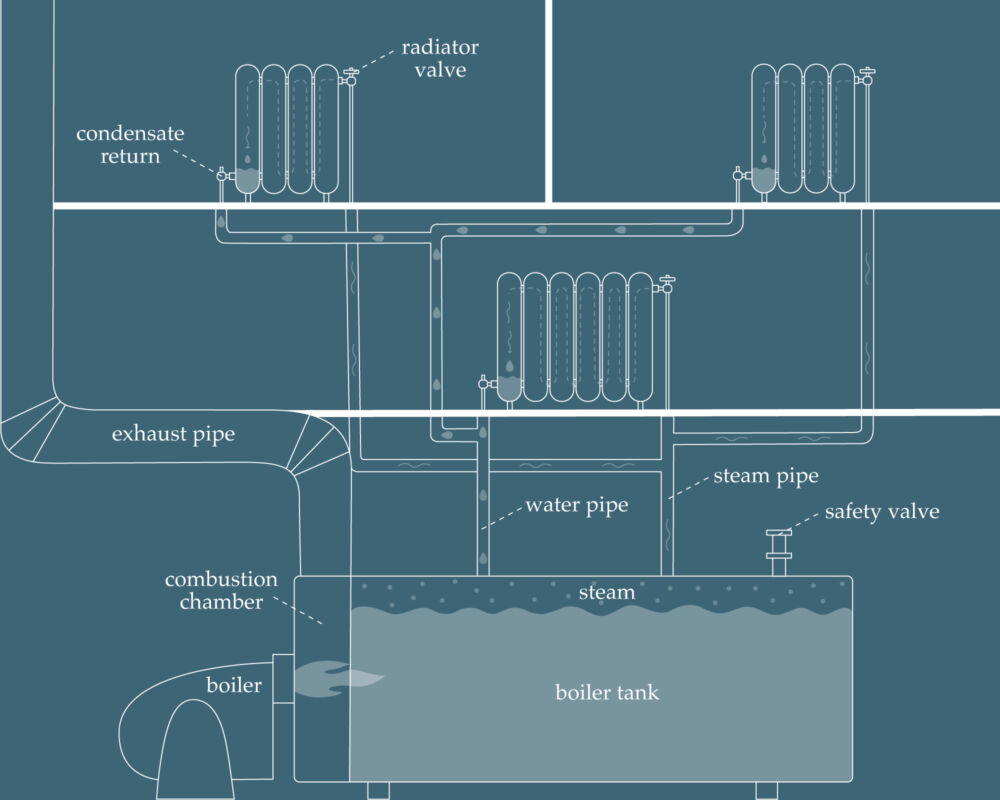
Overview of a two-pipe steam heat system in an apartment building. Illustration by Diana Steelman
Steam boilers are large tanks filled with water, typically located in dedicated rooms in the basement of an apartment or office building, that are used to heat the entire structure. A typical steam heating system is made up of a boiler tank, a burner with heat exchanger, and a distribution system to generate and circulate heat throughout a building. Here’s a closer look at how each part functions:
- Burner: The system is powered by a burner, where heating oil or natural gas combine with a controlled amount of air to create a mixture that will burn and release heat energy. This mixture is injected into the combustion chamber (located beneath or within the boiler’s water tank), where an electric spark ignites the fuel to create an intense flame.
- Heat exchanger: The combustion chamber is connected to the heat exchanger, where heat is transferred without the flame ever directly touching the water, through the use of metal components — often metal plates or tubes (sometimes called second-pass tubes). In industry parlance, the heat exchanger moves heat from the “fire side” of the boiler to the “water side.”
- Boiler tank: Water within the boiler tank is heated to its boiling point of 100° Celsius, or 212°F, where it evaporates into steam.
- Distribution system: As the water boils into steam, it creates pressure that pushes the steam up along the delivery pipes to radiators within individual living spaces. Heat is then transferred from the radiators into the desired area, causing the steam to cool and return to liquid water, or condensate, that returns back down the pipes of the delivery system to the boiler, to be heated again.
- Exhaust pipe: Meanwhile, exhaust gas from heating the boiler is vented through a chimney out of the top or side of buildings and dissipates into the atmosphere — which is where the carbon emissions come from.
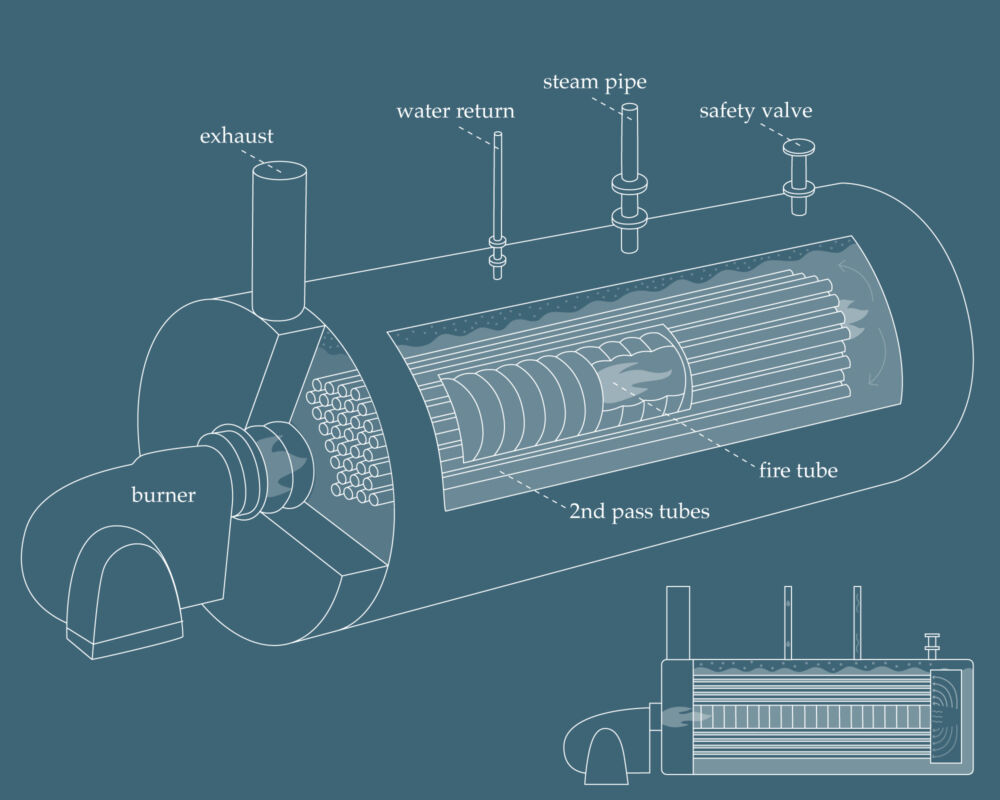
Detail of the combustion chamber and heat exchanger of a boiler. Illustration by Diana Steelman
How well do steam boilers work?
Most steam heating systems in 20th-century New York City buildings respond to a combination of indoor and outdoor temperature signals to know when to turn on and provide heat to apartments. For example, a typical boiler in the city won’t turn on if the outdoor daytime temperature is higher than 55°F.
New York City buildings that use steam heat boilers have done so for decades with few interruptions, providing reliable heating to their residents even during the coldest winters. However, most older steam heat systems were designed specifically for reliability over efficiency. By law, boilers built since 1992 must convert around 80 percent of fuel to heat energy, but some older models may convert only around 60 percent after accounting for losses at various stages of the heating process.
Many steam boilers are grossly oversized relative to the space they’re meant to heat, at the cost of burning much more fuel than is sometimes actually required. As a result, it can be difficult to balance the heat distribution evenly or efficiently across individual apartment units. Some units, like those on the top floor, may be notably colder, while units on lower floors can get so hot that they need to be cooled in the winter by opening a window.
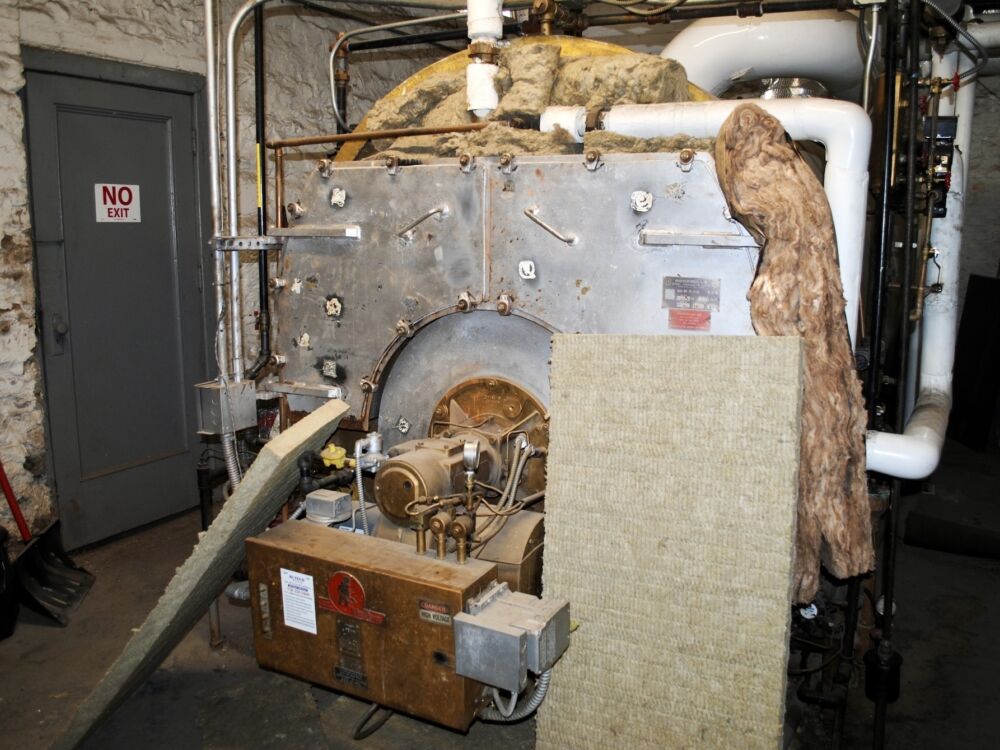
Sun Garden Homes’ boiler — “Basically a big teapot, boiling water,” according to cooperator Mike Weiss. Photo: Hannah Berman
What’s wrong with my steam boiler?
Steam boilers have a few common issues that can usually be avoided through regular maintenance and annual inspections. If a boiler won’t fire up at the end of the summer season, for example, there could be an issue with the ignition system that sparks the fuel to heat the boiler.
There are also some simple retrofits that can help improve efficiency for older systems, or those with uneven heating. Individual radiators can be fitted with thermostatic valves used to adjust the amount of steam supplied to each unit, giving residents a degree of control over how much heat is delivered.
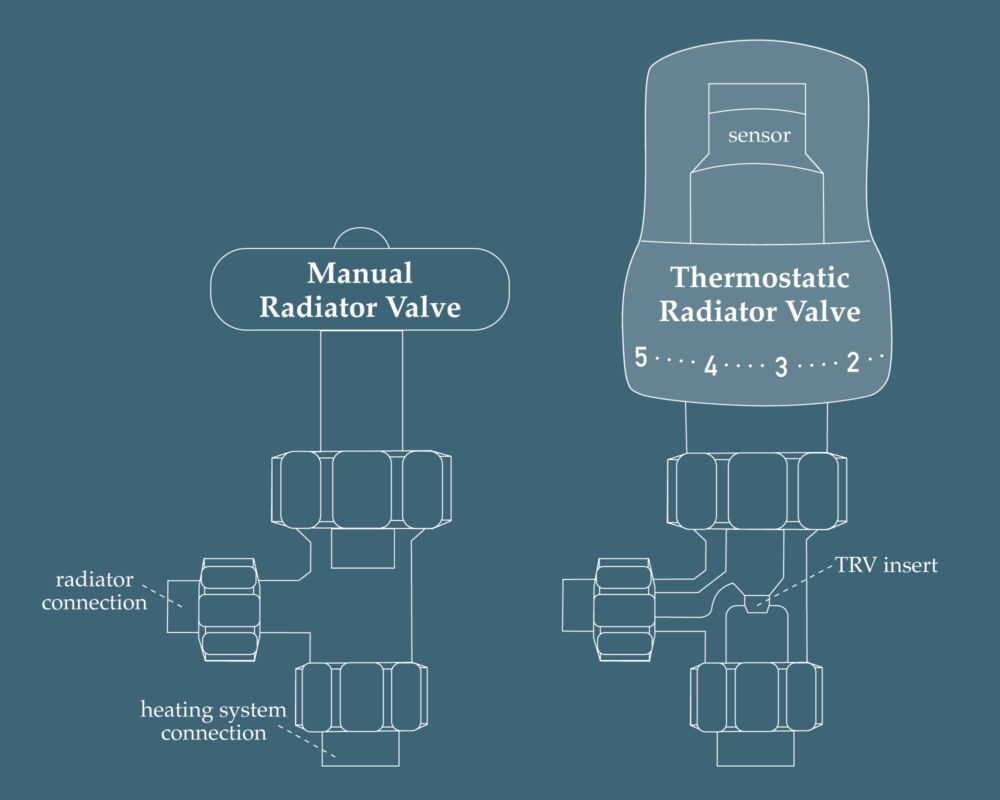
Radiators come standard with a manual radiator valve (right), but they can be replaced with a thermostatic radiator valve (left) for greater local temperature control. Illustration by Diana Steelman.
Leaking pipes, especially at joint areas where two pieces of the system connect, can also be an issue after many years of use, or particularly cold winters with constant heating loads. In this case, the boiler may refuse to start because the level of water in the system has dropped too low, which can be a serious safety hazard and lead to pipe or boiler ruptures.
Any leak that leads to increased water use and the system needing to be refilled with fresh water can lead to further problems down the line. New water entering the system contains dissolved oxygen and minerals, which can coat the boiler tank and impede heat transfer. Ideally, new water should be introduced to the boiler as little as possible, so shutting down the system temporarily to repair leaks and damaged pipes should always be a priority.
Boilers have sensors that measure pressure within the system. If the pressure drops too low, or if these sensors malfunction and need to be replaced, a boiler may refuse to start, or only run for a short time before shutting off automatically. Sensors can also malfunction due to corrosion from steam exposure over time, sedimentary buildup, or other contaminants that make their way into the boiler, so inspecting and replacing these sensitive components on a set schedule should be a part of a regular maintenance plan.
What does the future look like for boilers in New York City?
Steam heat boilers have become an integral part of life in New York, but they now find themselves at a turning point as the city aggressively works to reduce its greenhouse gas emissions. Going forward, some buildings will opt to transition away from steam heat boilers entirely and switch to heating systems powered by electricity, such as heat pumps. But the transition is going to be a gradual one, and in the meantime, there are steps property owners can take to improve the efficiency of existing boiler systems to meet the city’s emissions reduction goals. We’ll explore some of those strategies in the next part of Skylight’s boiler explainer series.