
Skylight offers a peek inside Two Charlton Owner Corp.’s energy efficiency transformation
The Charlton House has been prepping for Local Law 97 since before the law even existed. See what upgrades they’ve embraced.
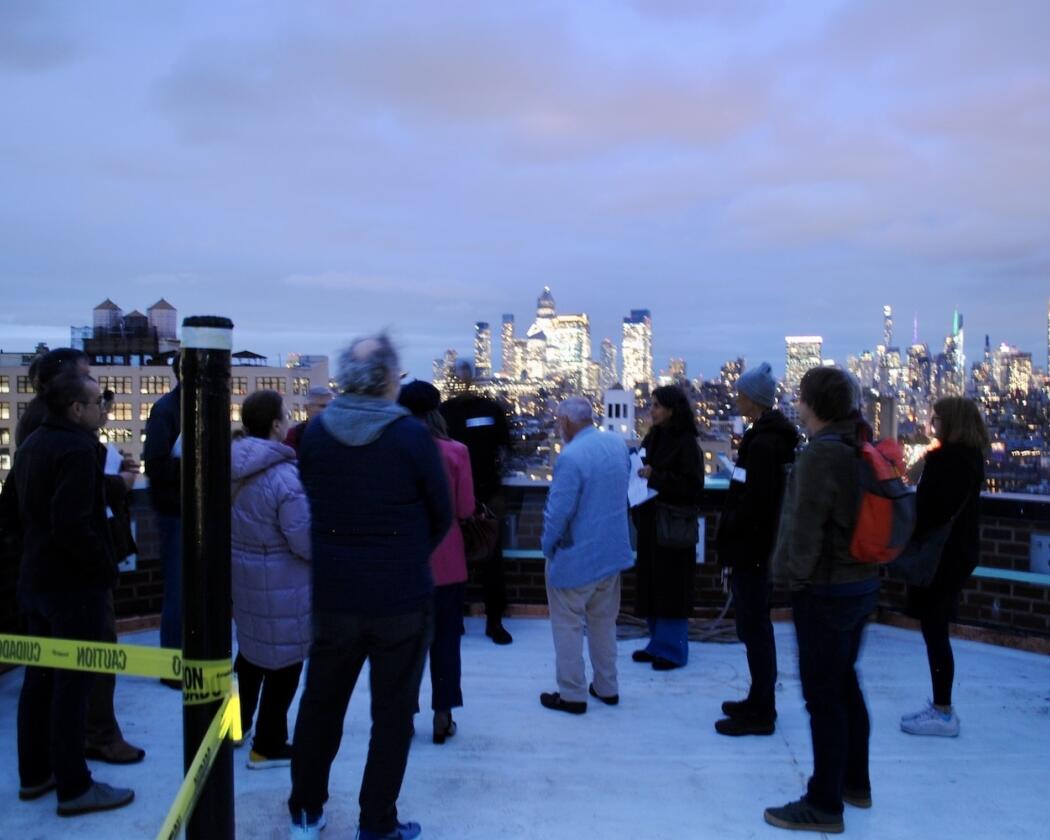
Attendees gather on the roof of the Charlton House. Photo: Hannah Berman
On October 29th, Skylight gathered an intimate grouping of homeowners at Two Charlton Street in SoHo for our first Clean Energy Building Tour. Attendees — who learned about the event through newsletters, neighborhood flyers, and word of mouth — came eager to learn about the building’s decarbonization projects and connect with others navigating Local Law 97 (LL97) requirements.
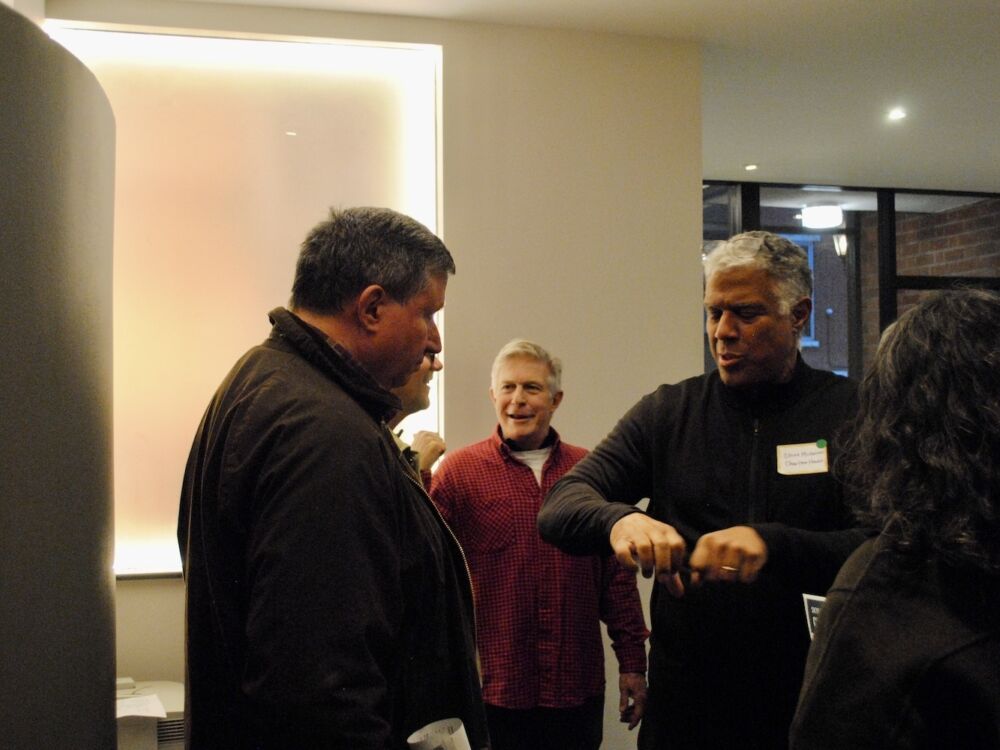
Cooperator Chris McGinnis, who led the Skylight tour, discusses upgrades in the lobby with board president Todd West. Photo: Jaime Stock
The tour began on the roof of the 16-story, 176-unit co-op, where Skylight’s Program Director Hannah Berman welcomed attendees and grounded everyone in the evening’s goals. As Berman made the point that decarbonization often feels most challenging in residential buildings, a knowing chorus of grumbles rolled through the group. Berman then introduced longtime Two Charlton Owners Corp. resident and board member Chris McGinnis, who led the tour. Backlit by the skyscrapers of northern Manhattan, McGinnis provided a quick overview of the building and the projects it has undertaken to date, starting in 2014 when the building switched from relying solely on expensive fuel oil for its boiler to an oil and gas mix that cut operating costs, and moving on to LED light bulbs, radiator insulators, ventilation upgrades, electrical submetering, and more.
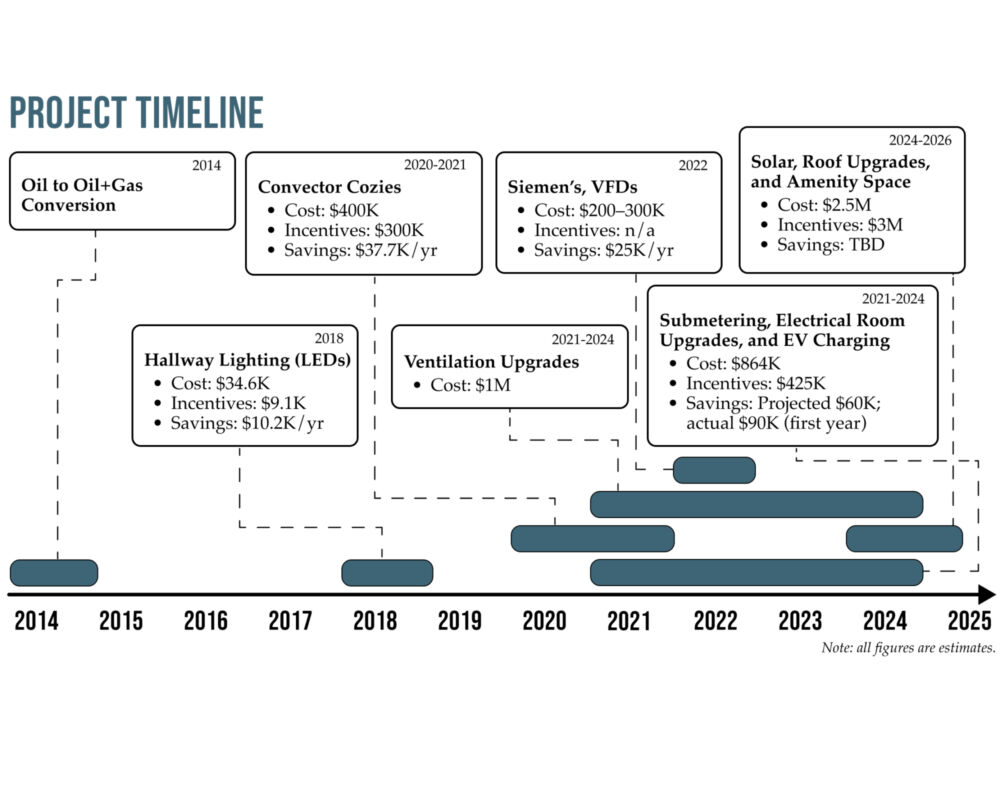
Charlton House’s project timeline for Local Law 97 compliance. Illustration by Jaime Stock
Attendees then turned their attention to the building’s latest project: The Charlton House is currently in its final stages of replacing its existing roof with Sika’s high-resistivity roofing system, featuring vacuum insulated panels (VIPs). The new system has improved the roof’s insulation R‑value from roughly R10 to R35, meaning the building will burn less fossil fuel for heat in winter, and use less air conditioning in summer. The roofing system is one component of a multi-part project costing approximately $2M total, which also includes solar panels and the construction of a roof deck for shareholders — a brand new amenity whose costs have been largely offset through federal credits.
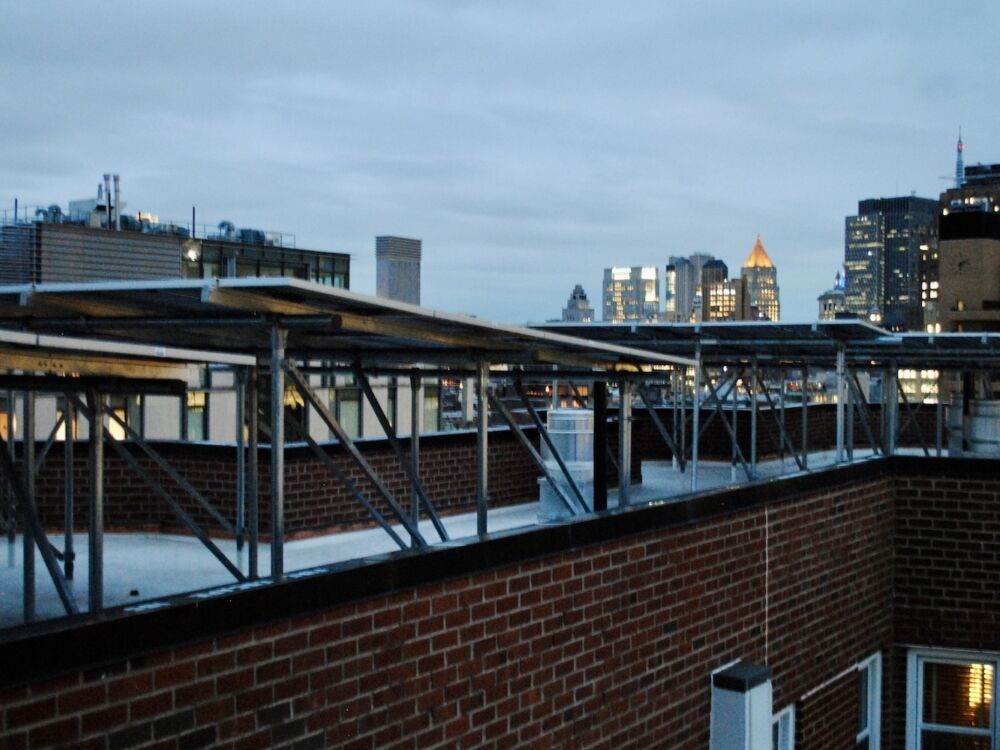
Charlton House’s new solar panels feed electricity back to the grid, turning unused roof space into revenue generation. Photo: Jaime Stock
The next stop was the electricity meter closet on the eighth floor — one of five in the building — where McGinnis introduced McGowan Southworth, Co-Founder and President of DaisyChain Energy. Southworth, who McGinnis calls his energy jungle guide, explained how DaisyChain helped Two Charlton move to submetering by transitioning from 183 individual Con Edison meters to one ConEd master meter, 176 residential submeters, and seven commercial submeters. This shift moved the building from paying higher residential rates per watt to lower commercial rates. A small portion of the savings has been passed on to residents, with the remainder reinvested in the building. For residents, submetering also makes it easier to track their power usage and adjust their habits to reduce bills and energy consumption. The project was estimated to save the building around $60K annually; since its September 2024 activation, it has already generated about $90K in savings.
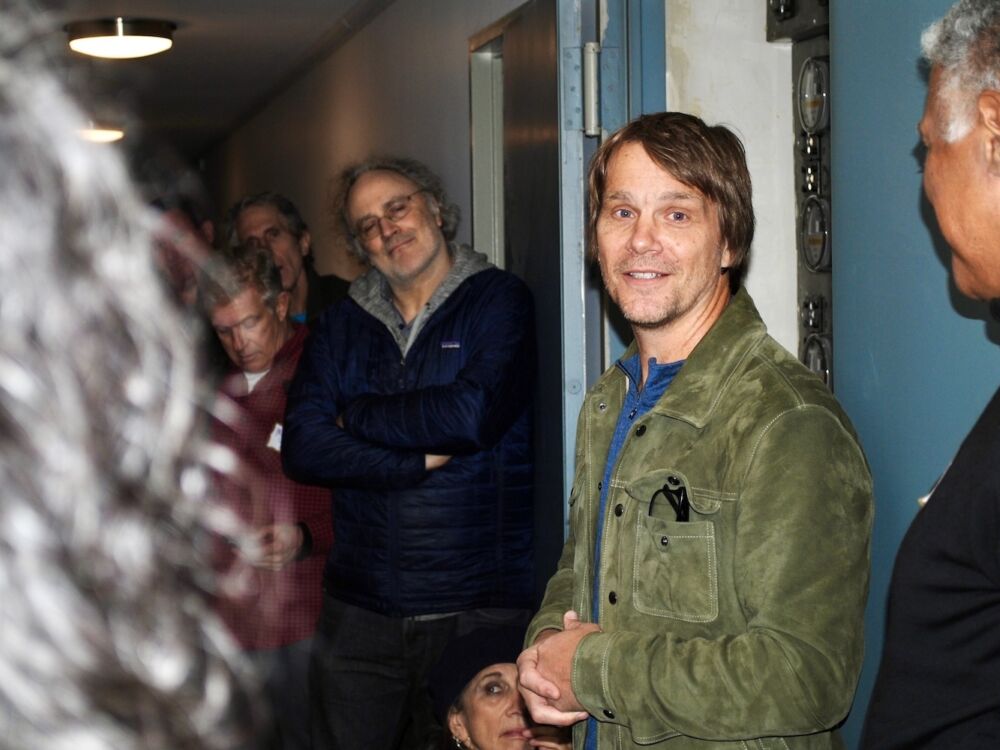
McGowan Southworth explains submetering at Two Charlton’s meter closet. Photo: Jaime Stock
In the basement, McGinnis showed off the complete upgrade and rebuild of the electrical room that enabled the submetering. The building did not elect to increase the building’s overall amperage during that project, but designed the new system to make future increases straightforward, should they be needed. For now, Two Charlton has sufficient amperage to move forward on projects like in-unit heat pumps and electric stoves — both on the horizon.
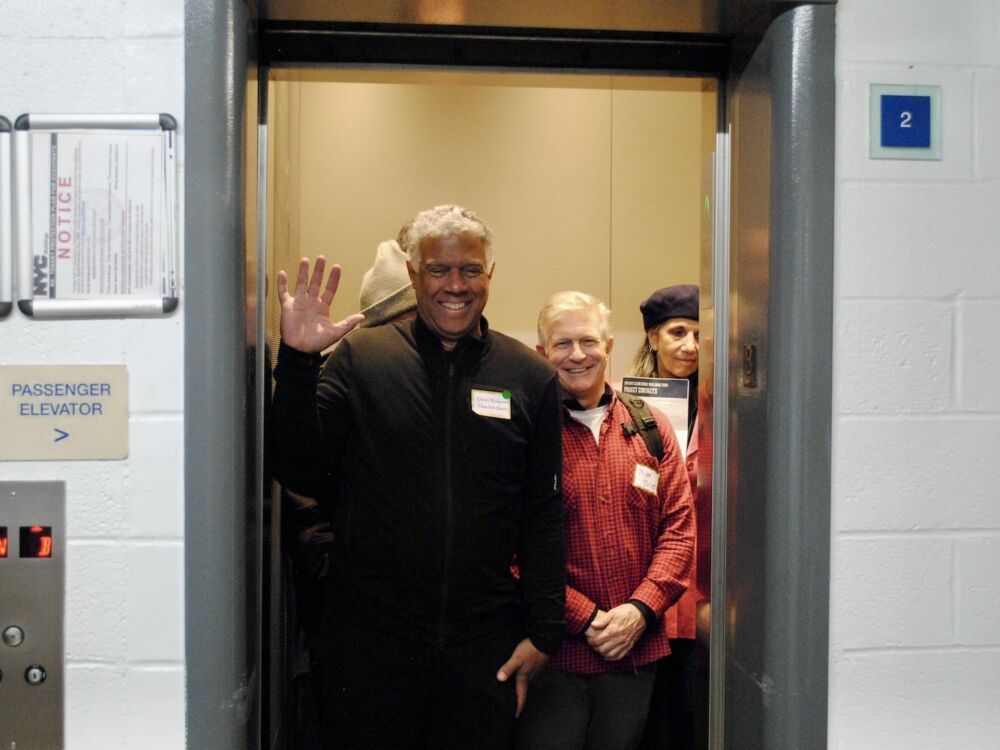
McGinnis and attendees take the elevator down to the basement. Photo: Jaime Stock
McGinnis next offered advice to attendees about tackling their own projects. Ever the planner and systems engineer, he encouraged them to think long-term and holistically about their own buildings’ needs when planning work, and to find people they trust to work with. Southworth alluded to the coming challenges New York City’s electricity grid faces as demand continues to grow, and encouraged residents to take advantage of opportunities to curtail their buildings’ energy use during peak periods. He explained how larger buildings might even enter into agreements with utilities that would pay them to reduce usage — by, for instance, running only one of two elevators during peak hours. Two Charlton has been exploring such opportunities through their parking garage EV chargers and other means, and McGinnis expressed enthusiasm about the revenue potential of these demand response programs.
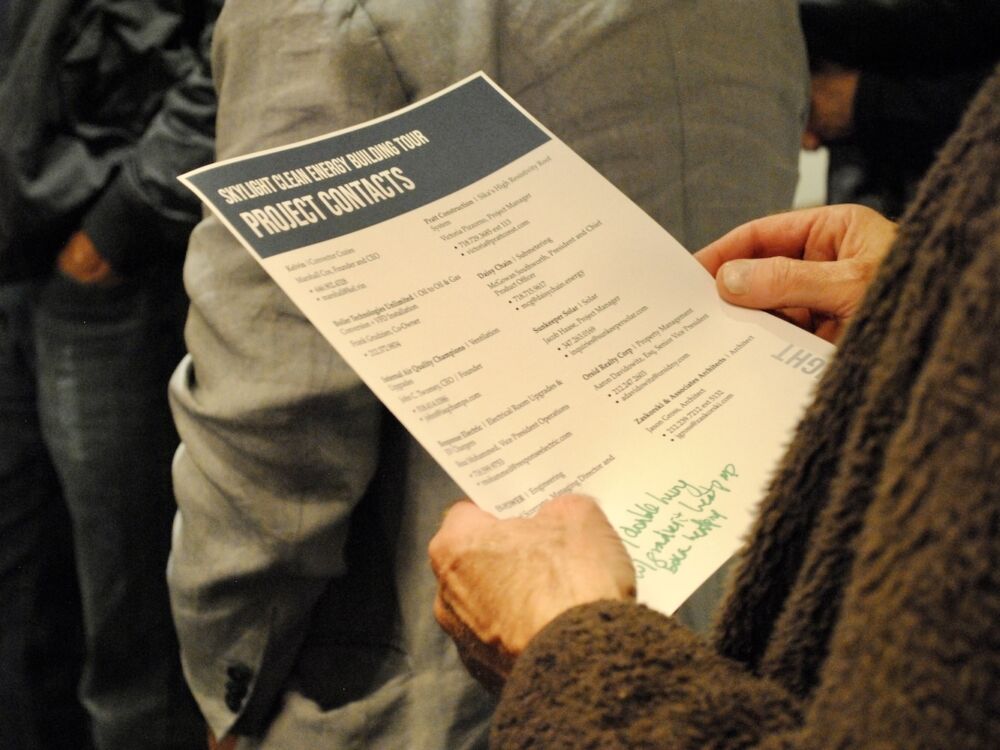
A cooperator in attendance takes notes. Photo: Jaime Stock
After the event officially concluded, McGinnis and Southworth stayed to answer questions about roof rebates, submetering requirements, and project planning. As one attendee said, “It’s a credit to this building and to Skylight that we don’t want to leave.” Even ten minutes after putting on their coats and heading into the cold October night, four cooperators — previously strangers — could be seen through the window talking about the event and comparing notes on their own buildings’ projects and challenges.