
A heat pump that slots into the façade and is pack(aged) with benefits
More retrofit projects are shifting toward the use of packaged terminal heat pumps, or PTHP units, as an energy- and cost-efficient way to upgrade a property’s heating system
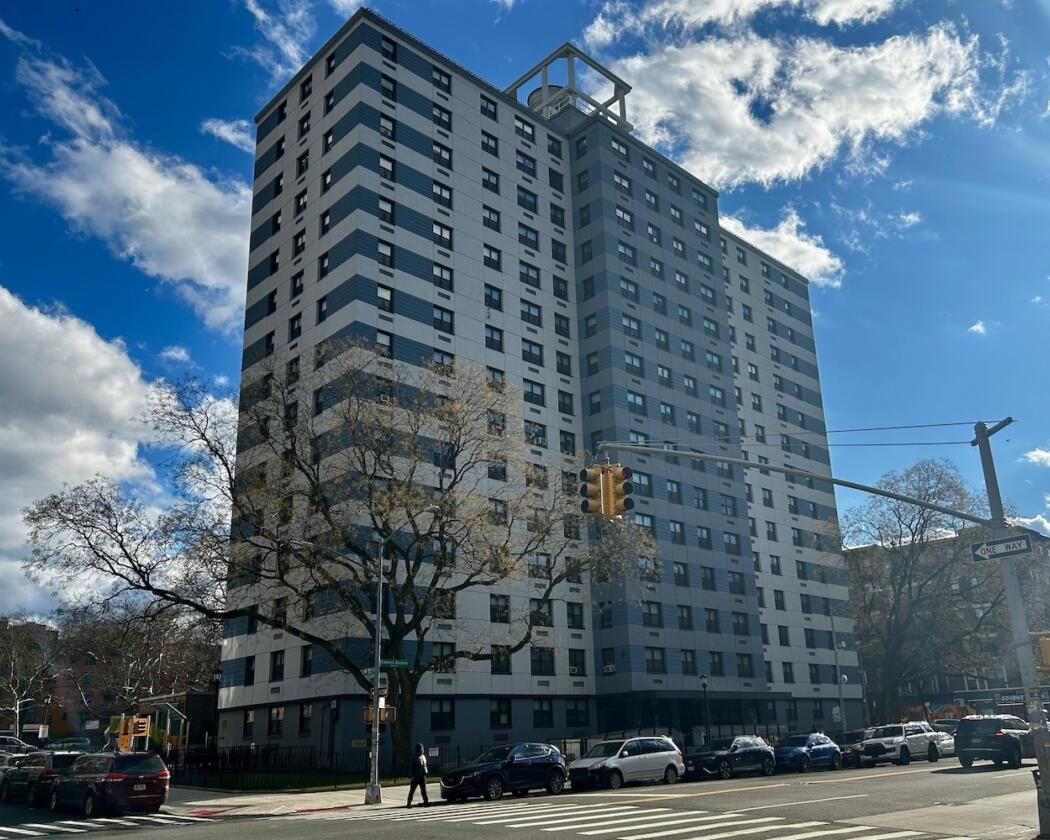
The Harlem River II tower has a new look, thanks to an energy-efficient overcladding system. Photo: Camille Squires
In electrifying the heating and cooling systems for Harlem River Houses, the two different sites on the complex required two different strategies. While the older, historic Harlem River Houses got a centralized VRF heat pump system, the second part of the site — a standalone high-rise built in 1966, known as Harlem River II, or HRII — was fitted with energy-efficient packaged terminal heat pumps, or PTHP units, in each of the apartments.
This technology was selected not only for its ability to provide electricity-powered heat, but also because the units aligned well with other efficiency-improving construction planned for HRII — namely, overcladding the building façade with an Exterior Insulation and Finish System (EIFS) to further insulate it.
PTHP boxes are self-contained heat pump units that fit through a hole in the building’s façade, pulling heat from the outside air and using it to warm an apartment, or vice versa, depending on the season. They operate using the same basic principles of a regular window air conditioner: Each box contains a refrigerant that changes temperature and pressure, so that it can either absorb heat from the space to cool it, or reject heat from outside to heat the space.
PTHP units are equipped with internal components that maximize energy output: An inverter inside the units which allows the energy output to be modulated continuously, based on how hot or cold it is within the building. In essence, they require a lot less energy to generate the amount of heat or cold air needed, making them more energy efficient than your regular A/C unit.
The EIFS overcladding, meanwhile, is a type of energy-efficient exterior that combines synthetic stucco with an additional insulation layer applied over a building’s original façade.
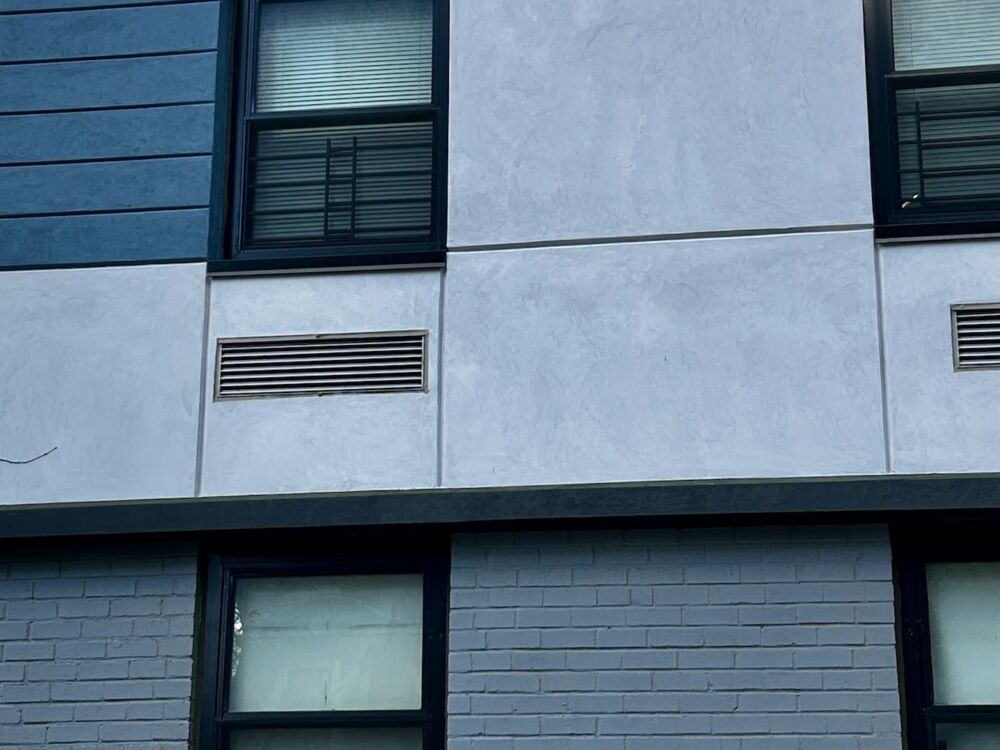
Vents, which sit beneath the windows of HRII, connect to the HVAC system inside. Photo: Camille Squires
“The overall scope of the project lent itself to doing the packaged terminal heat pumps,” said Rupal Singh, associate at Inglese Architecture + Engineering, the firm involved in the HRH complex’s retrofit project.
Although PTHP units are not the most energy efficient heat tech currently available on the market, these units still produce two to three times the amount of heat compared to older systems powered by oil or gas using the same amount of energy input. In other words, PTHP units have a much higher coefficient of performance (COP) rate of 3.31 at 47 degrees Fahrenheit and 1.80 at 13 degrees Fahrenheit, which are the maximum outdoor temperature conditions expected in NYC (known in construction as “design day”).
“It’s not going to get you the highest COP that’s available, but it’s probably the middle ground between what’s practical for a retrofit” and high efficiency, said Singh. “You still greatly improve the [heat system] efficiency without having to spend four or five times the amount of money to put in a ground-source or some sort of water-source heat pump system.” This practical middle ground cost a relatively-modest $2.1 million for the installation of PTHP units in the tower.
Upgrades like the PTHP units have helped the HRII tower reduce its overall energy use and carbon emissions and get into compliance with Local Law 97 (LL97). And beyond the benefits of improved energy efficiency, PTHP units provide an advantage of convenience. Since these units work as contained systems installed into individual apartments, if a unit requires maintenance, management can simply replace the unit with a working one while the broken unit is taken out for repair.
According to Singh, challenges in the PTHP installations were mostly related to the extra planning work needed beforehand, due to the aged infrastructure of the HRII building.
Electrifying the tower’s heating system required a lot of infrastructure work, and developers had to work with Con Edison to ensure that enough electrical capacity was supplied to sustain the tower’s electrical upgrades alongside other electrification projects happening in the area. These changes in turn affected the rehabilitation project’s construction timeline.
There have already been new iterations of this type of packaged units on the market just in the time since the heat pumps were installed at HRII in mid 2025. Singh believes these packaged heating units are an emerging tech that we will see more of as cities like New York push toward energy efficiency.
“I think the industry in general, especially New York City, is going to be shifting away from the VRF type of systems in general. And I think the use case for these packaged units is going to be a lot more than the VRF type of units,” Singh said.
Correction (Jan. 14, 2026): This article previously misstated how the electrical wiring for the PTHP units was installed. We regret the error.