
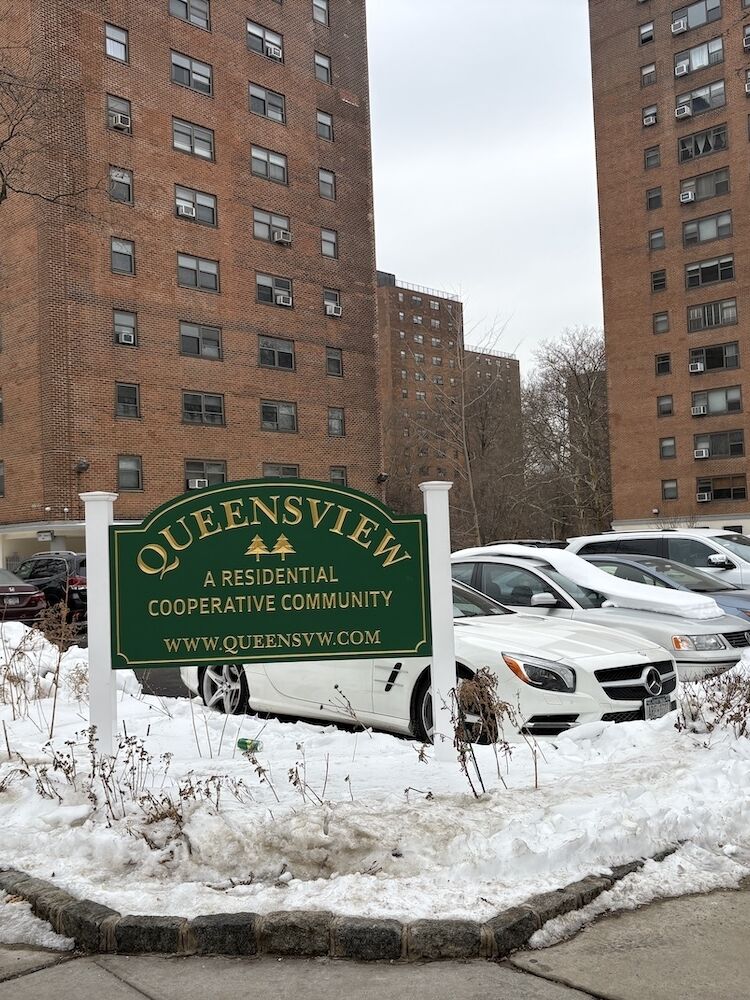
The entrance to Queensview, a 726-unit co-op in Astoria, Queens. Photo: Emily Driehaus
At a middle-income co-op in western Queens, a series of smaller projects over a longer period do the same work as a single big-ticket upgrade to reduce carbon emissions
During New York City’s historic cold snap in January and February, the Department of Housing Preservation received about 80,000 complaints of heating-related issues in buildings across the city. But Victor Roggia’s 14-building housing cooperative in western Queens wasn’t among them, thanks to its recent energy efficiency upgrades and new building management system (BMS).
“Throughout these cold temperatures, we’ve been monitoring the system night and day,” Roggia said.
Roggia is the co-op board president of Queensview, Inc., a huge complex that spans ten acres and over 700 individual apartments. Founded in 1950, it was built to be a middle-income housing development as the borough’s population continued to swell during the second half of the 20th century. But as the decades passed, the co-op’s infrastructure has not kept up with the times, leading to leaky ceilings, costly bills and a hefty potential Local Law 97 (LL97) penalty. Roggia, a former electrician who knows a thing or two about project management, was determined to fix things when he got elected to the board.
“We went through bringing the place into the 21st century starting in 2018,” he said. “Since then, it’s been off to the races.”
The Challenge
When their work began in earnest about five years ago, Roggia and the Queensview board were facing rising energy costs, and also staring down the barrel of a potential $450,000 LL97 penalty for 2030, which would have to be passed down to shareholders. Already dealing with the costs of deferred repairs and maintenance fees not covering rising electric rates, Queensview couldn’t afford to wait to make a dent in their carbon emissions.
The co-op had already established a relationship with engineering firm EN-POWER GROUP a few years prior, when the complex underwent a transition from fuel oil to natural gas for heating and hot water. So when Roggia started exploring options for LL97 compliance, he called Thomas Morrisson, EN-POWER’s director of energy management. After evaluating all the options, they soon discovered that going fully electric to slash carbon emissions wouldn’t be a feasible option. Along with being prohibitively expensive at about $60 million, there didn’t exist enough infrastructural electrical capacity to support Queensview’s heating and hot water system in addition to regular electricity needs. Expanding the capacity would have involved expensive, disruptive infrastructural upgrades with Con Edison, the cost of which would have fallen entirely on the shareholders.
“There’s only so much electricity available. One of the things we uncovered was that it was going to be expensive,” Morrisson said. ”These options were out of budget because they’d have to dig up the street and put in bigger wires and then bring more power into the buildings.”
So, with a full electrification retrofit out of the question, Queensview turned to the next best option –– improving the efficiency of the systems they already had. From more intense projects, like installing a BMS to track electricity use and apartment temperatures and implementing a submetering plan, to tried-and-true solutions like improving insulation and installing efficient appliances and lightbulbs, the co-op has pieced together a LL97 compliance plan that will not only cut their overall emissions, but save them money in the long run, too.
“We’re keeping the boiler system, we’re keeping the pipes. We’re not ripping anything out,” Morrisson said. “We’re just trying to bring that efficiency.”
The Roadmap
To get their carbon emissions and expenses down, each project Queensview took on was aimed at reducing either electricity or natural gas consumption. The co-op also made changes to help reduce its overall water consumption, allowing it to avoid costs associated with rate hikes alongside price increases for electricity and natural gas.
To reduce gas usage, the co-op invested its resources in making repairs to the steam heating system, insulating both the pipes and the boilers themselves to capture BTUs that would have otherwise been lost. They also replaced the insulation in each of the 14 roofs during scheduled repairs, further reducing the overall heating need. Finally, they used sensors in the BMS to monitor ambient temperatures in order to prevent overheating apartments.
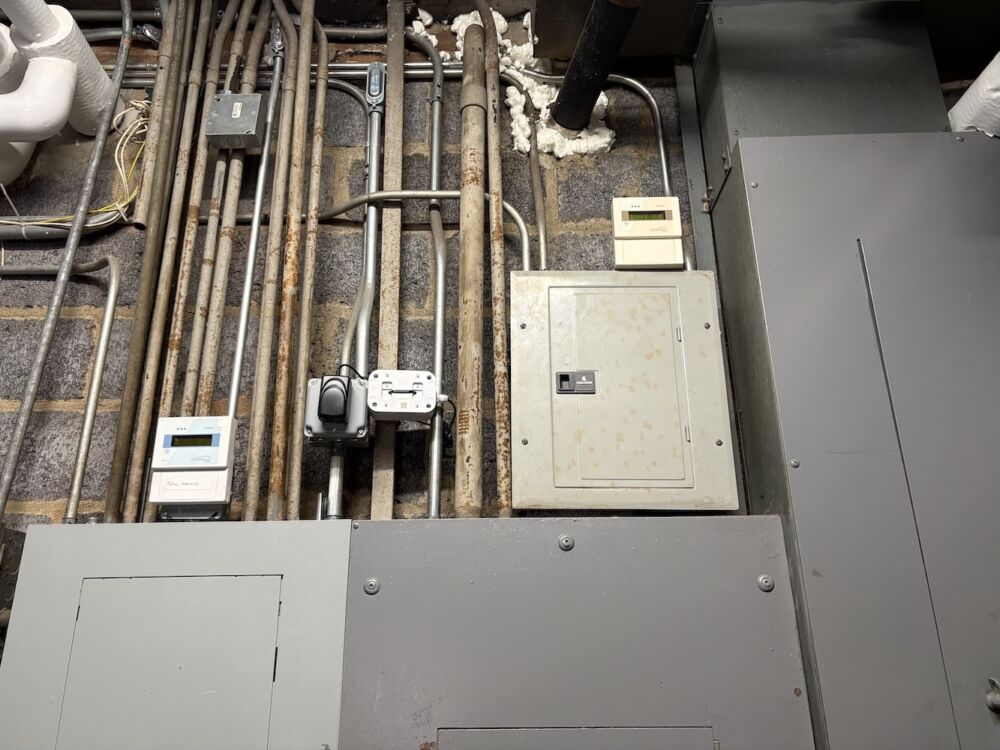
A new InTech21 meter sits over an electrical box. The meters are part of a building management systems platform that allows property managers to view real-time utilities usage. Photo: Emily Driehaus
On the electricity front, Queensview implemented a new policy for appliances –– shareholders can now only use Energy Star air conditioners, and kitchen appliances that aren’t certified need to be replaced when a unit is sold. LED lighting has been installed across the complex, in common areas and private homes alike, along with motion sensors, new efficient exhaust fans on the roof, efficient washers and dryers in the laundry room, more efficient water pumps, and submetering, so each shareholder pays for the electricity they use.
Outside of the roof and submetering projects, which were completed with larger necessary repairs, the less-intense efficiency projects altogether cost about $400,000. Luckily, Queensview had a robust cash reserve fund to pay for most of these projects. The reserve had been largely funded through transfer fees, commonly known as a flip tax, which is paid by the seller each time a unit is sold to keep cash reserves funded. Queensview’s rate is 20 – 25 percent of the selling price, depending on when the seller purchased the shares. Generally, flip tax rates in the city vary between one to three percent, so Queensview’s is higher than average. Alicia Fernandez, Queensview’s treasurer, said that the flip tax brings in between $2.3 and $2.9 million annually. Having a healthy cash reserve fund meant that no assessments were levied on shareholders to pay for any of these improvements, and maintenance increases are generally implemented every few years, rather than annually.
“We have contemplated levying a capital assessment to raise funds, but this would be a hardship for many of our shareholders,” Fernandez said. “We have been able to stave this off for now.”
Additionally, Roggia said that having these upgrades completed will help increase the resale value of all the apartments.
“There’s two things we think about all the time: Reducing our carbon footprint, and how these [projects] affect our maintenance and resale,” Roggia said. “We feel that we’re eons ahead of most other complexes when it comes to this stuff. And it wasn’t by happenstance — it was hard work.”
With so many projects, Queensview was able to take advantage of a number of incentives through ConEd and NYSERDA. According to Morrisson, nearly every upgrade was aided by some kind of utility or state incentive. For example, the installation of the BMS components qualified for a one-time NYSERDA rebate of $120,000 through their Real Time Energy Management Program, plus an ongoing rebate for the data analysis and recommendations that EN-POWER provides for Queensview. Con Ed’s Multifamily Energy Efficiency Program provided a $64,000 rebate for the installation of custom boiler jackets to insulate the heating system and make it work more efficiently, effectively cutting the cost in half for an upgrade that paid for itself in energy savings in about two years.
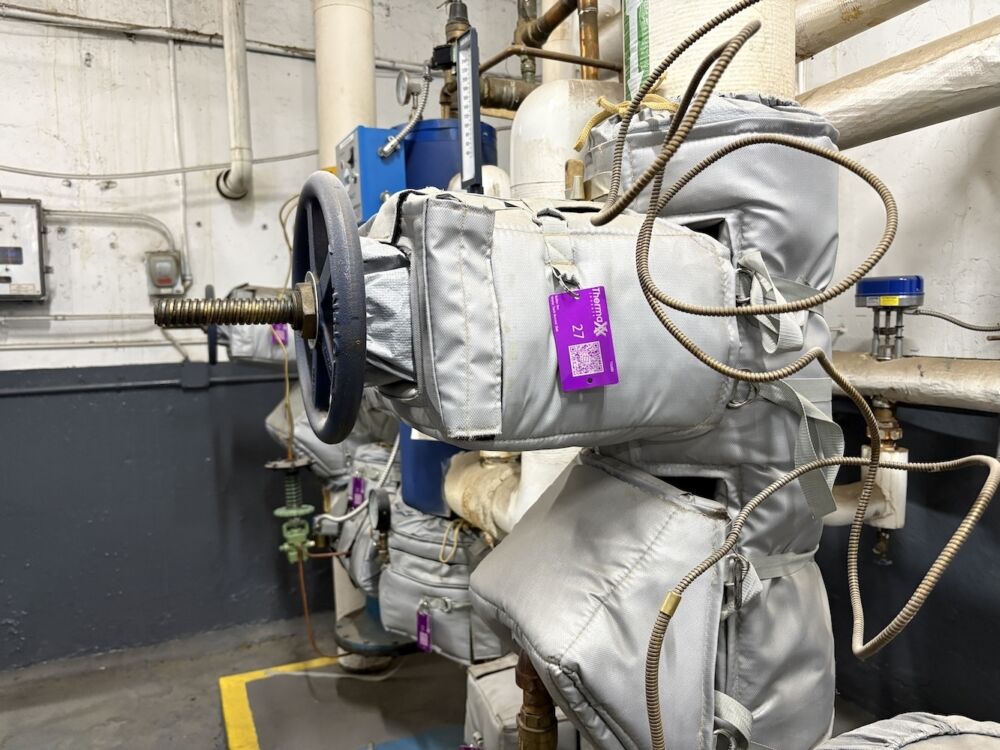
Insulating jackets cover the heating system in Queensview’s boiler room, helping it work more efficiently and saving energy. Photo: Emily Driehaus
Additionally, Queensview met the stringent requirements for the revamped J‑51 R tax abatement program, which allows buildings to offset the cost of capital improvements through reduced property taxes. The submetering, roof repairs, and additional required façade improvements all together meant that the co-op qualified for nearly $3 million dollars in tax breaks over nine years. But the application process itself is laborious for a property of Queensview’s size, according to Fernandez, so the board hired Miles Appelman, a professional J‑51 expediter with Salomon & Appelman, Ltd., to submit the application before the tight deadline last year.
“The new legislation said that any work completed by Dec. 31, 2024 would have to be completely filed by April 30, 2025,” said Appelman. “So that caused a four month period to try and figure out what was passed, and then it was a fire drill to try and get everything in.”
The Project
Because Queensview intentionally took this piecemeal approach to its upgrades, the co-op’s many projects stretched over the course of about eight years. Most of the improvements aren’t necessarily readily visible to shareholders. The pipe insulation doesn’t stand out too much, the custom-fit boiler blankets live in the boiler room, and the direct drive roof exhaust fans aren’t a daily destination for people living in the building. Most of the work was done in areas that didn’t obstruct day-to-day life very much.
But these upgrades all contribute to the efficiency of the most apparent change –– submetering with the new BMS. When outdated electrical fixtures needed to be brought up to code, workers went one by one to each apartment to install updated electrical panels and each individual BMS unit.
Queensview was originally a master-metered building, meaning that the co-op received one bill for everyone’s electricity usage, and the cost was split evenly among shareholders. Yet this meant that energy-conscious residents weren’t reaping the benefits of using less, as their neighbors could continue to use more electricity without paying for it directly. Queensview installed InTech21 units in each apartment during required electrical work in 2022 and 2023. The complex officially started submetering last March, and now residents are in charge of bills that directly reflect how much electricity they have used.
Even in just a year, Roggia said they’ve already seen a significant decrease in electricity use. And a majority of residents have already seen a drop in their monthly costs, after going from a flat fee to only paying for what they use.
“Everyone thought electricity was free until they started paying,” Roggia said. “And then, all of a sudden, their awareness changed and they started using less…I would say 65 percent of [our shareholders] had a reduction in their maintenance every month.”
Queensview shareholders were generally receptive to the submetering once it got going, as most directly benefited, according to Roggia. But getting access to all the apartments required lots of communication and back-and-forth. That communication has also been necessary in making shareholders aware of the new efficiency requirements for appliances and the other work completed around the complex. But according to Morrisson, project management-minded Roggia and the rest of the board have taken a much more proactive step forward than many other buildings, emphasizing the importance of this work coming from community members with a vested stake in the building.
“Both here and in other buildings that are being proactive, it’s the boards and board members that are mostly driving these projects, not management companies,” he said.
That community investment by the board — of time, money, and other resources — has led to real savings since this wave of change began. Queensview saw an 11.4 percent reduction in electricity use from 2024 to 2025, and Roggia anticipates a further reduction after a full year of submetering. Natural gas use declined 17.6 percent over the same time period. This translates to a reduced 2030 LL97 penalty of $153,534, based on 2024 data — but Roggia anticipates this will be reduced to zero, once 2025 data is analyzed.
The Future
With all the gains Queensview has made in the past five years, Roggia still has more projects up his sleeve. He and Morrisson trade emails about what’s feasible and what could save the co-op more money while reducing emissions. Roggia plans to implement a new policy this year for energy-efficient refrigerators in all the units, and he’s even piloting a new control mechanism that would open and close valves in the heating system for individual zones within apartments based on the BMS temperature readings, offering even more precise control.
“We talk about our return on investment all the time,” Roggia said. “All the projects we’ve done, we are getting a return on them… because we’ve done the ones that we could afford.”
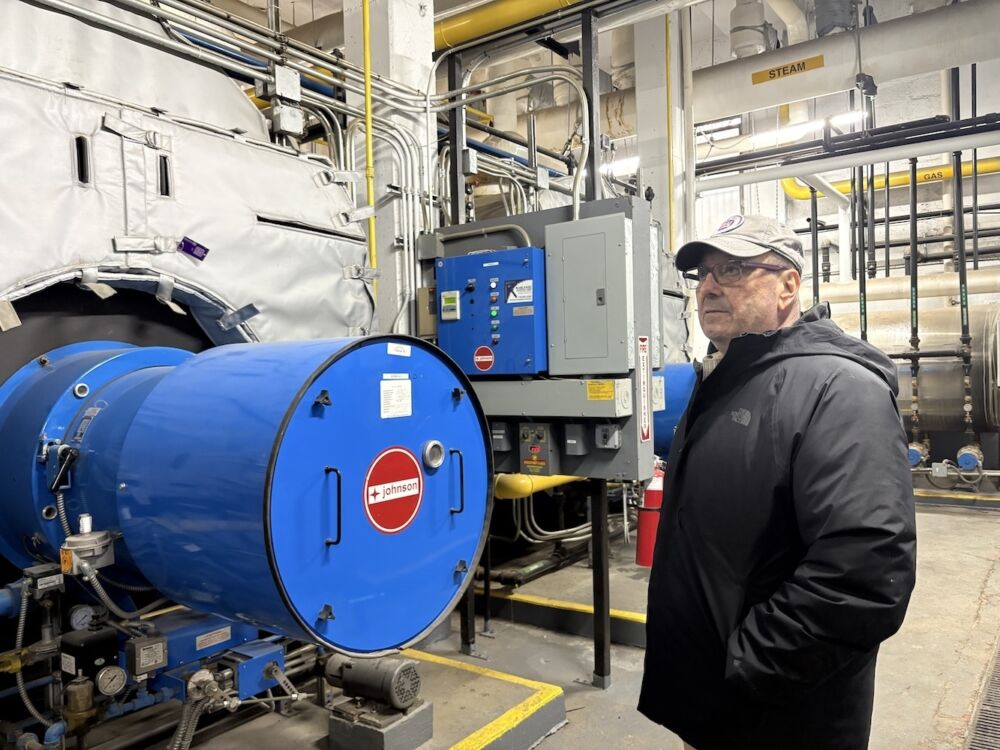
Victor Roggia walks through the boiler room, equipped with new jackets for the boiler. Photo: Emily Driehaus
Even as Roggia reflects on all of this, he knows that they’ll eventually run out of improvements to make before any major electrification retrofit takes place. Additionally, more than 90 percent of the downstate electric grid still runs on fossil fuels, meaning that most of the electricity used in the five boroughs contributes to carbon emissions. Treasurer Alicia Fernandez said that she believes cleaning up the grid should be a larger priority than imposing fines on buildings like Queensview that are making good-faith efforts to comply with LL97.
“Why is the burden of the carbon emissions reduction goal being imposed on thousands of co-op buildings, which have always been a core component of truly affordable housing, run by volunteer shareholders?” she said. “Our government officials should be focused on sourcing cleaner energy.”
Given the barriers and questions about full electrification, the step-by-step path to compliance that Queensview has taken might be a more realistic path for most buildings right now, according to Morrisson.
“I have a feeling it’s going to be more of that middle ground, I just think that’s where it has to go,” Morrisson said. “The city has said that they don’t want to fine people, so the middle ground is, ‘Let’s do what we can within a reasonable budget that achieves meaningful things.’”