
New York City’s first community-owned solar project is the definition of a team effort
Longtime community organizers UPROSE worked with a group of allies to bring community-owned solar to Sunset Park.
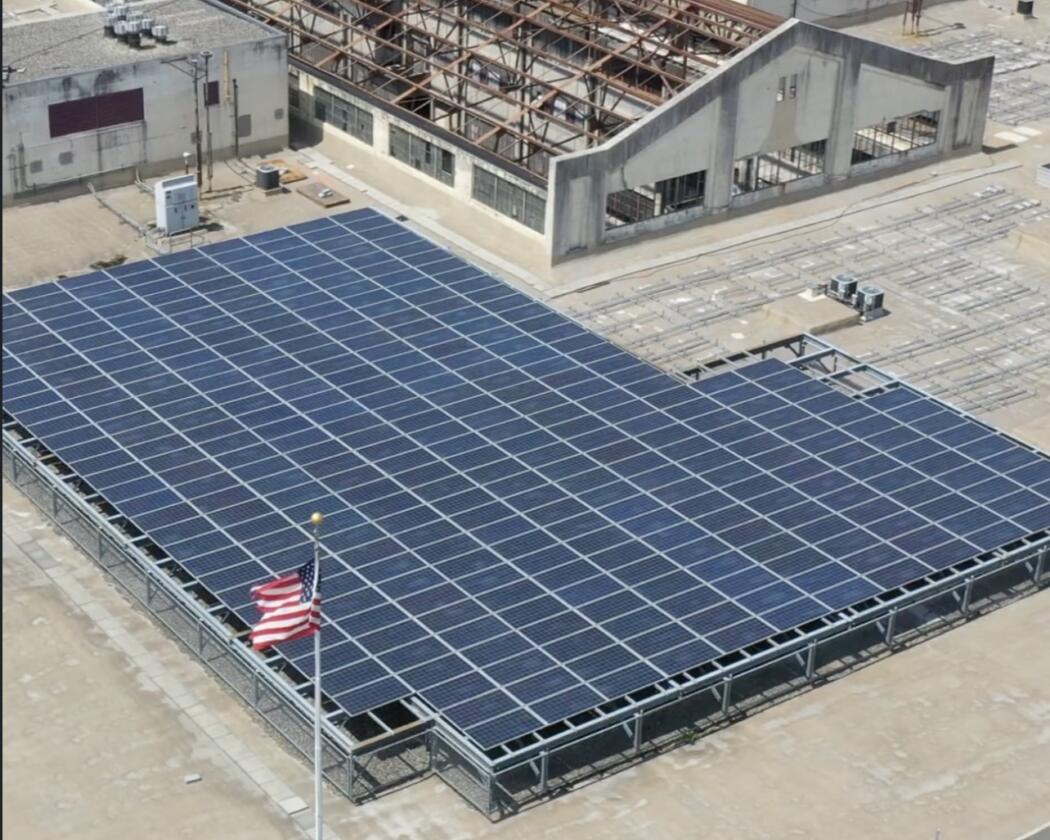
The community-owned solar installation on the roof of the Brooklyn Army Terminal. Photo: Courtesy of UPROSE
For over 50 years, UPROSE, Brooklyn’s oldest Latino community-based organization, has worked for environmental justice in Sunset Park. Much of that work starts by asking the residents what they need: Drinkable water, food sovereignty, wellness, “and renewable energy with ownership at its core,” said Elizabeth Yeampierre, the executive director of the organization.
“We want something that we can all benefit from collectively,” Yeampierre explained. “And so, early on, we started thinking about what a community-owned solar initiative would look like in response to the mandate from our community.”
The result is a 725-kilowatt solar array installed on the roof of the Brooklyn Army Terminal that started delivering electricity directly into New York City’s grid this year. The project, the first community-owned solar project in the city, is expected to deliver $1.24 million in energy bill savings to 150 households over its lifetime. The solar array was completed in May of this year, and enrollment for local Sunset Park households is now open.
The project also grew out of years of coalition building. UPROSE is part of REVitalize, a statewide campaign coordinated by the New York City Environmental Justice Alliance (NYC-EJA), a nonprofit membership organization, that seeks to advance community ownership of renewable energy.
Daniel Chu, senior energy planner at NYC-EJA, explained that “community ownership of renewable energy infrastructure is something that we pushed for since 2016 as a response to former Governor [Andrew] Cuomo’s Reforming the Energy Vision plan,” and REVitalize was part of it.
With significant expertise in climate and energy policy, “REVitalize was also tremendously important in identifying resources and questions that we needed to keep in mind as we were moving forward,” added Yeampierre.
That support proved essential. Yeampierre said that every part of the implementation process was difficult, but the biggest challenge was financing a project in which a community-based organization would own half. “Financing something that is owned and run and led by Black and Brown people is always a challenge. The assumption is that we don’t know how to manage money,” she explained, and emphasized that the team experienced heightened pressure from having little room to fail during this process.
To tackle the technical and legal expertise needed and get help with raising funds, UPROSE partnered with Working Power, a developer focused on energy projects in underinvested neighborhoods. “They’re experts in finance — our work with each other is complementary. They really know how to work with frontline leaders in a way that is really respectful and builds trust.”
UPROSE staff participated in project development calls with Working Power, where they integrated their knowledge of Sunset Park and local political conditions. The organization had also spearheaded public education on clean energy to galvanize local business owners and residents to support and participate in the solar program.
The UPROSE and Working Power teams hope that their experience can serve as an example for similar programs to be implemented around the country. To mitigate challenges, they recommend preparing a checklist of resources, lawyers, and individuals who are experienced in clean energy land use to support working through legal jargon. Those contacts can aid in creating and reviewing contracts or agreements..
Looking back at the challenges of implementing this project, Yeampierre emphasized the importance of collaboration and partnership. “These were things that we had not anticipated. And having the right team makes a really big difference — a team that is aligned in terms of core values and is willing to see the project through.”