
Capital Planning: The misunderstood but mighty tool for co-op and condo retrofits
Skylight’s guide to the work that can help boards manage regulatory compliance, energy transition, and maintaining aging building systems.
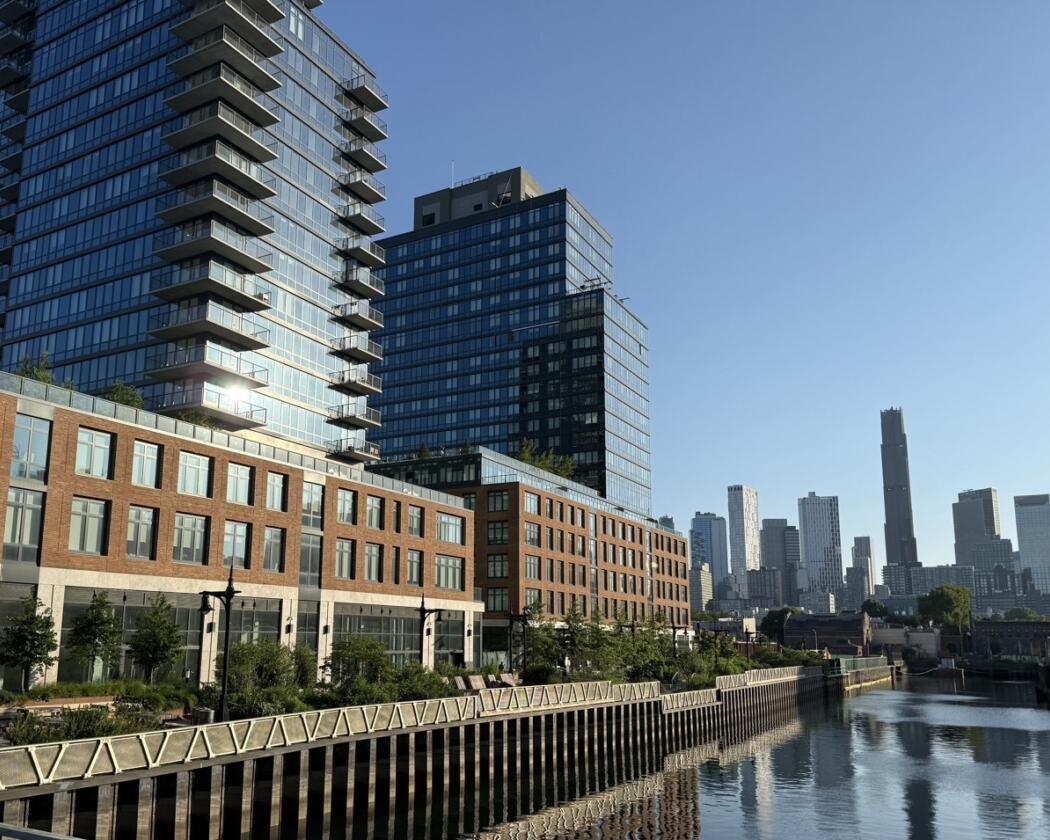
Photo: Eric Lee
Editor’s note: The following guide to capital planning was inspired in part by the Strategic Decarbonization Planning resource for co-ops and condos developed by the Building Energy Exchange. This article has been updated to reflect this attribution, and Skylight recommends using both tools complementarily.
Many New York City co-op and condo owners know by now that Local Law 97’s (LL97) increasingly-strict emissions caps will likely require major retrofit construction projects. This work not only helps buildings to avoid fines, but can also lower their operating costs, and increase comfort and property value. Still, this work can seem daunting to boards who must navigate these demands.
It’s also true that decarbonization projects can be expensive. One of the most powerful tools for managing this cost challenge is by using careful financial and project planning. With a thoughtfully structured capital plan, boards can gain clarity and control as they take on projects that will necessarily stretch over many years.
Capital planning as it relates to decarbonization work is a process in which a building takes stock of its current building energy systems, and uses that information to forecast future projects. By methodically understanding what work needs to be done and when, boards can decide when and how to deploy that capital. A capital plan can show that building electrification and other LL97 modifications don’t have to happen all at once.
“What you want to build into the capital plan is the ability to facilitate decision making,” explains Amalia Cuadra, senior director of engineering at EN POWER GROUP, an engineering firm with a focus on sustainability that has had a hand in designing several retrofit projects Skylight has written about. Cuadra led the decarbonization efforts at The Victoria, a Manhattan co-op that strategically undertook a number of projects over four years, because they’d planned them out.
Another building Skylight has profiled, the 67-unit co-op in the South Bronx called Sherman Terrace, also engaged in a capital planning process. Board president Derek Jones worked with Thomas Morrison, director of energy management at EN POWER to develop a multi-year plan. “One of the most important points is that we worked in phases. We did not try to solve everything at once,” said Jones. “We have to patch what we can achieve now and prepare for what we are going to achieve in the future.”
For boards just starting out, there are several tools available to begin the process of capital planning. For example, NYC Accelerator offers free technical assistance to help buildings identify potential projects based on their specific compliance requirements.
And this April, the Building Energy Exchange (BE-Ex) launched new Strategic Decarbonization Planning resources for co-ops and condos with city, state and industry partners. The toolkit offers a set of step-by-step recommendations users to follow, as well as checklists and case studies to refer to.
The BE-Ex guide helped lay the foundation for Skylight’s own guide to capital planning for an energy retrofit, as did expert advice from EN POWER GROUP. While experts emphasize that no two buildings’ capital plans will look the same, these are some general principles to abide by.
Step 1: Understand the work ahead
The first step is about information, organization, and personnel.
It can be helpful for boards to create an informed committee with defined roles and a clear mandate to manage LL97 compliance alongside the building’s other capital projects.
Early organizational questions are simple, but important: Given the complexity of energy retrofits and other LL97-related work, who gathers information, who communicates with residents, and where is outside expertise needed? Everyone on the committee should have an understanding of what LL97 entails, and stay abreast of any relevant updates to the policy. Another challenge for boards is preserving learnings in a way that survives board turnover.
This is also the point where boards may consider bringing on an outside professional to help guide the work. Of all the experts Skylight spoke to, professionals and amateurs alike recommended that buildings not try to go it alone when embarking on this work. A strong team may include the existing property manager, as well as new members such as energy consultant, an engineer, legal counsel, city advisors such as those from NYC Accelerator, and financing partners.
“You really want a qualified firm that’s going to help put the entire landscape in front of you,” said Cuadra, “and also, at the end of the day, make sure that you’re doing this work in a way that is practical.”
Jones relies on the Council of New York Cooperatives and Condominiums (CNYC), where he is a board member, as a resource, in addition to working closely with EN POWER Group and NYSERDA.
Step 2: Take an inventory of the status quo
The second step is diagnostic: Having a holistic understanding of where your building stands now is essential to making wise decisions about what changes should come down the pike.
This is where performing an energy audit can prove supremely helpful. These audits can offer reliable data on a building’s current energy use and, importantly, its current carbon emissions, relative to LL97 limits. Boards should also review data from past energy bills, review square footage and system data, and do an inventory and inspect major equipment, to understand what’s near the end of its life cycle.
The goal with all of this information is to establish a baseline for both emissions and physical condition before deciding what to replace, and when.
Taking an inventory can offer a clear picture of a building’s current and future energy costs, but it’s also an important juncture to understand the future cost of inaction. Knowing that LL97 caps get stricter over time, a board can project future penalties to compare the relative costs of a big capital expenditure now versus the compounding costs of mounting fines in the future.
“If you know your penalty is going to jump a crazy [amount] in 2035, even though we’re planning now, you can start figuring out how you’re going to put this budget together,” explained Cuadra.
Sherman Terrace and EN POWER took advantage of incentives through NYSERDA to fund a detailed energy audit, which revealed that the building had only a low C for its Local Law 87 Building Energy Efficiency Rating. Not encouraging news, but it was at least a clear starting point.
“We’re under tight restraints,” Jones explained at a later event about the building’s projects. “We don’t have revenue-driving forces in this co-op environment, so we have to be very smart with how we are using money.”
Step 3: Sequence the work
Once decision makers understand the building’s systems, emissions, energy use, and replacement cycle, it allows them to make informed decisions about the order in which to tackle decarbonization work. This is at the heart of strategic decarbonization planning: sequencing upgrades around equipment age, available financing and incentives, building reserve levels, shareholder tolerance for increased assessments, and compliance risk.
“That’s the value of a capital plan,” said Cuardra. “You know within the immediate term, these are the things that I need to address immediately — anything that’s urgent. Then within the first one to two years, these are the things that I need to plan for. Within the next five years; within the next 10, 20 [years]. So you kind of expand it so [residents] can see when they need the money.”
It’s helpful to review what Sherman Terrace was able to do:
Like many mid-century co-ops, Sherman Terrace had no insulation, drafty single-pane windows, and aging building systems. Advised by EN POWER, Jones and the board used a phased strategy to make changes over four years. They took advantage of what Jones described as a “huge incentive and tax credit blanket,” including, Con Edison rebates, federal solar tax credits, and NYC solar property tax abatement, which all in all added up to more than $350,000 in supportive dollars. Jones said their capital planning gave them “breathing room to explore other options such as heat pumps and insulating the building envelope.”
Sherman Terrace added LED lighting in 2019, and a 305-kilowatt solar array with net metering to reduce their utility costs in 2020. In 2021, they converted their boiler from using fuel oil to natural gas, and installed electrical submetering, a Real Time Energy Management System and boiler controls the following year.
EN POWER’s Thomas Morrison emphasized that, “The submetering and controls, including adjusting the boiler set points, and the behavioral changes on the residents’ side, enabled savings that almost doubled from where they would have been, had they only dealt with the boiler and separate hot water heater.”
A note on financing
Experts stress that a successful capital plan is the key to a successful financial plan.
“The capital plan tells you how you’re going to be spending money, and [then] you can do the financial plan,” Cuadra explained, to determine where the money will come from, and when.
Most buildings will need a financing stack, not a single source of capital: mortgage refinancing where available, can be one source, as can increasing assessments on residents. But buildings may also look to “green lenders” who specifically provide financing for decarbonization projects. There are also many state and federal incentives and rebates available to lower costs, such as those from NYSERDA. New York City offers a robust tax-incentive financing program for this work, the J‑51 abatement program, which the city and the state are currently revising in order to expand eligibility and timespan considerably
For Sherman Terrace, an overall budget of roughly $1 million over four years was partially financed by $320,000 accessed from mortgage refinancing, $350,000 in federal, state, and utility incentives, and local tax abatements. The work required only modest 7 – 10 percent increases in annual maintenance fees, beginning in 2023. The results of this careful capital planning and systems upgrades is substantial: Sherman Terrace reduced its energy use by 34 percent, cut its emissions 42 percent, now enjoys a 30 percent utility-cost reduction, and in so doing, raised its energy letter grade from a C to an A.
Other financing tools may be relevant for larger projects. Ivy Trzebucki, who leads climate financing for decarbonization at the Mayor’s Office of Climate & Environmental Justice, said that C‑PACE loans are an excellent source of capital for large projects. She predicts they will be more useful due to some recent underwriting changes. C‑PACE does require primary lender consent, however, and applicants may run into mortgage restrictions.
Step 4: Carry out the work, but monitor costs
Execution is where the plan engages procurement, financing, resident communication, and construction. Boards must select qualified vendors, lock in incentives, and keep the project scope aligned with the financing strategy.
Once the work gets started, it’s important to monitor how actual costs line up against the budget so that there are no surprises.
This is also why boards should stay involved rather than delegate the process to a third party such as a management company or consultant. The point is to use professionals well: consultants can prepare scopes of work, help evaluate bids, identify incentives, and importantly, avoid expensive sequencing mistakes.
The most important thing to remember is that LL97 compliance is not a one-time project; once a plan is in place, adjustments can be made to accommdate changing realities. Boards need to track energy use, verify savings, and revisit plans as incentives, technologies, and capital needs change.
This step also reinforces the need for resident communication. Jones said, “A key lesson is to communicate to shareholders in a way that will enroll them in the process. You want to onboard people that are proactive in evaluating new ideas and who can help educate shareholders about how to operate your building in a clean way.”
Jones said he likes “to be first,” because that means he’s in the loop when new ideas come around. Sherman Terrace has enrolled in a NYSERDA heat pump feasibility study launching mid-2026. The study covers the installation of through-wall and saddle-window heat pumps for one year. If savings are realized, Sherman Terrace hopes to purchase the equipment.
For co-ops and condos, electrification and building improvement is not all or nothing. The smartest boards start before they are forced to, compare multiple pathways, and use incentives to make progress affordable. The goal is to assemble a team of shareholders that can design a plan that is responsive to changing policy, technology, and financial incentives while improving the value, health, and comfort of their building.
Additional reporting contributed by Camille Squires